
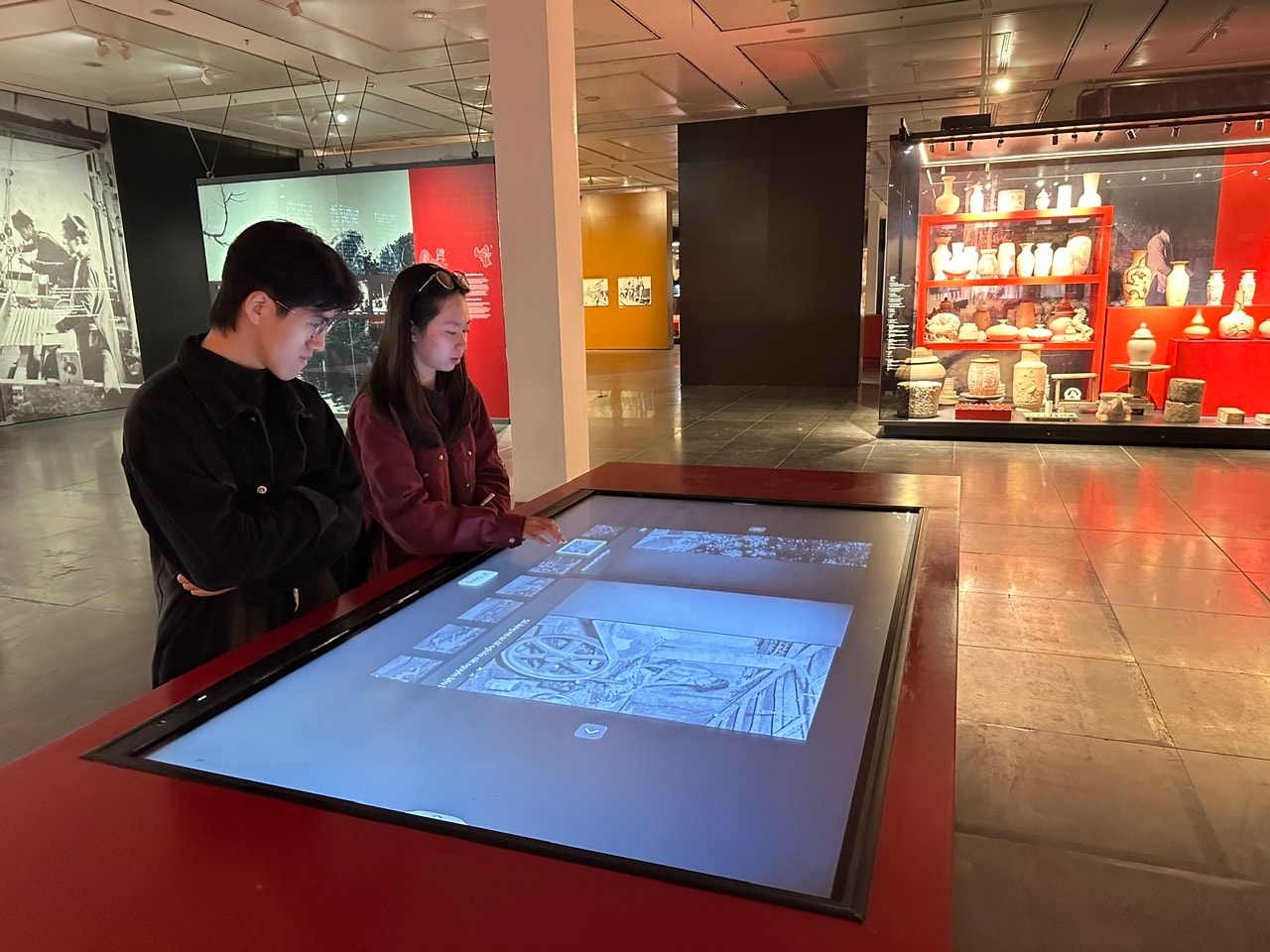
Visitors can experience the application of digital technologies combined with exhibitions at the Hanoi museum. Photo: Hoang Quyen
After a long preparation period, the Hanoi museum has inaugurated a permanent exhibition system following a new approach, in which technology plays a role in connecting heritage to the public.
Museums no longer limit themselves to static exhibitions, but become places of experience, interaction, and discovery. This practice shows that integrating technology not only revitalizes museums but also enhances their ability to disseminate heritage, gradually integrating cultural values into contemporary life.
Technology expands the “living horizons” of heritage.
After years of content development and object collection, the opening of the permanent exhibition system on February 3, 2026, marks a significant turning point for the Hanoi museum.
According to Mr. Dang Minh Ve, Deputy Director of the Hanoi museum, the change lies not only in the form but also in the modern form of the exhibition, where technology has become an essential tool in narrating the heritage story.
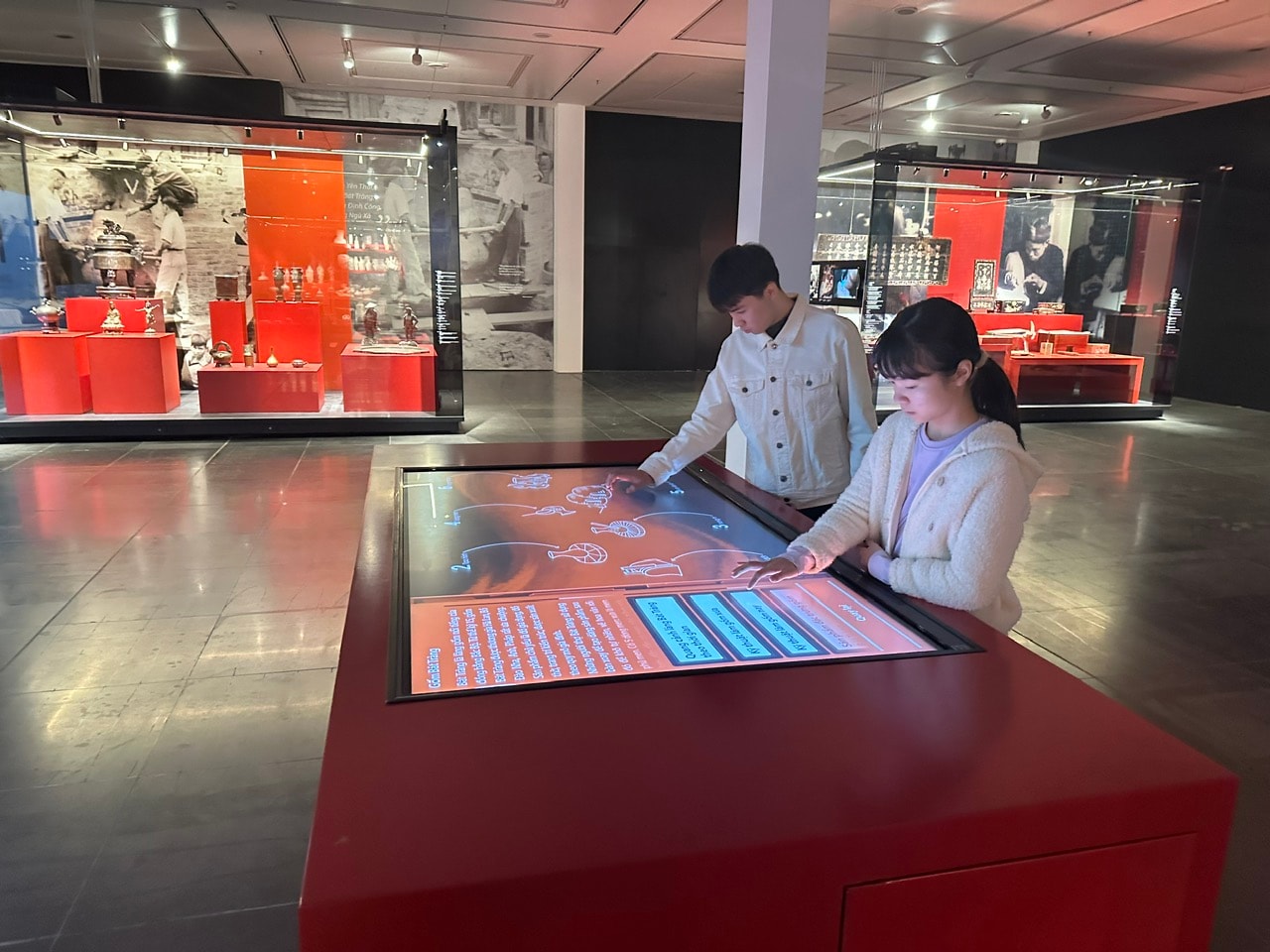
The museum space harmoniously combines heritage and modern technologies. Photo: Hoang Quyen.
Mr. Dang Minh Ve stated that, unlike sterile displays, the current museum space harmoniously combines heritage and modern technologies, offering a multisensory experience. The first point of contact with the public is the high-definition digital printing system. Images are projected onto a durable composite wood-plastic material, combined with a colored adhesive film, creating a clear and vibrant visual rendering, with great longevity.
Furthermore, projection technology has been deployed on a large scale, with 98 videos displayed in exhibition spaces. Large screens placed in strategic locations not only inform but also evoke emotions, naturally guiding visitors to the heart of each historical narrative.
The system is notably distinguished by its 24 interactive screens, organized by theme and sub-theme. This illustrates a radical shift in how the public interacts with content. Freed from static information, users can now actively research, select, and explore content through direct interaction.
In the pottery village of Bat Trang, technology has enriched the immersive experience. In addition to observing objects, visitors can discover the history of the village, linked to the 1010 decree on the capital transfer, and delve into the pottery-making process through six digitized stages with precision. Precious documents from national and international sources are also integrated, creating a true “knowledge repository” within the museum.
As seen, technology contributes to expanding the living horizons of heritage, transcending the limits of space and time. Visitors not only admire objects but also understand the underlying history, from the past to the present.
It is important to emphasize that 100% of the objects exhibited in the museum are authentic. Mr. Dang Minh Ve emphasized that only authentic objects can evoke genuine emotions. However, displayed statically, these objects struggle to express their full value. This is why technology is used as a complementary tool, allowing the objects to “speak” more clearly.
This approach is clearly evident in the combination of traditional objects and contemporary elements. In addition to 19th-century Bat Trang ceramics, the museum also presents modern ceramic works, allowing the public to appreciate the continuity and transformation of this artisanal village in contemporary life.
The technological system also allows for personalizing the visitor’s tour. Each person can choose the formula that suits them, from a quick visit to a deep exploration. Additionally, the digital content is regularly updated, allowing the museum to always remain current and relevant.
Mr. Dang Minh Ve affirmed that to create an effective exhibition space, three elements must converge: content, solutions, and technology. Content is essential, technology is the means, creating an intersection that not only preserves heritage but truly brings it to life in the hearts of the public.
From digitization to heritage ecosystems: a synchronized approach is necessary.
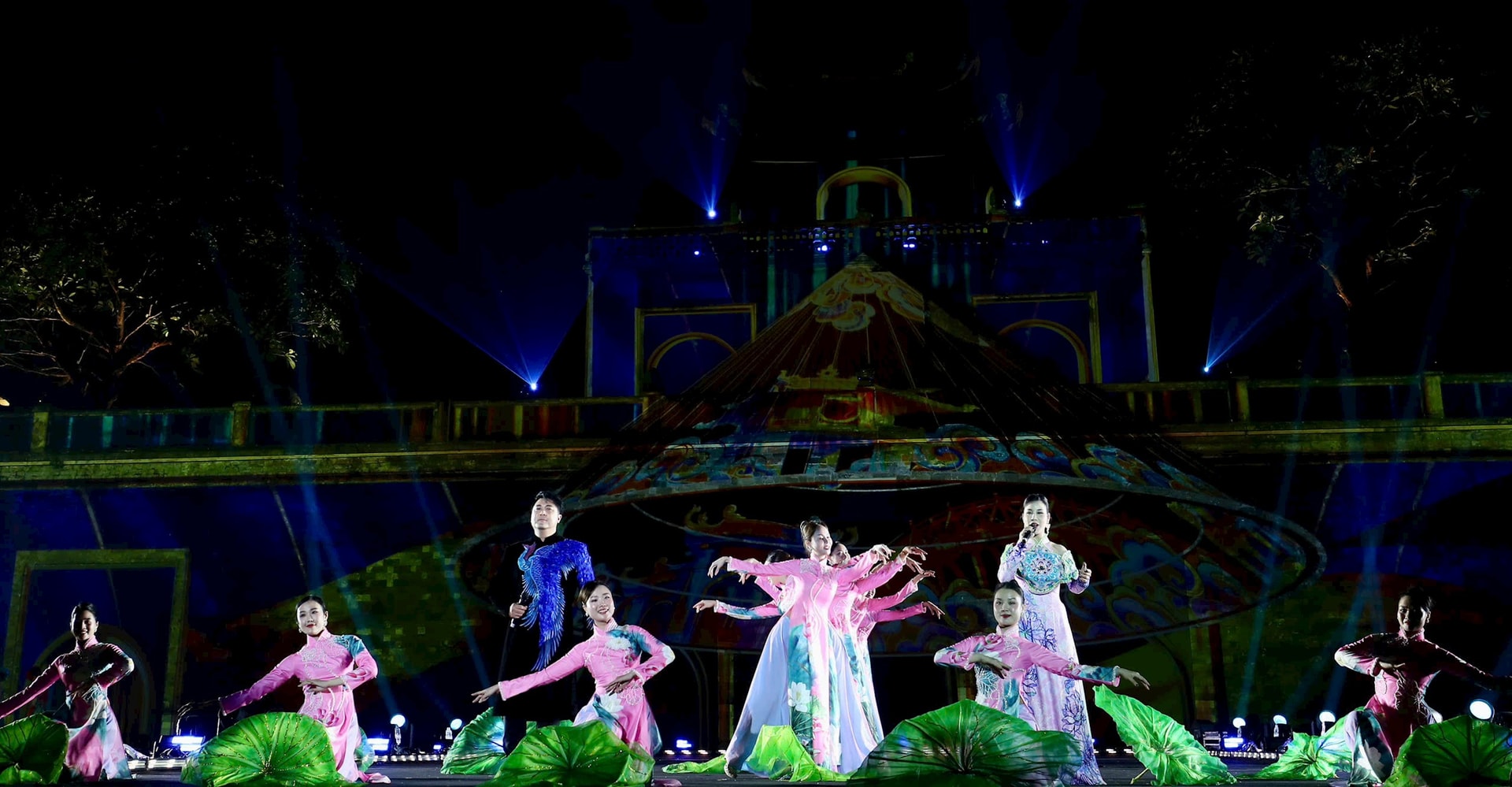
The international parade of national costumes “In the Footsteps of Heritage,” accompanied by a 3D map projection, was presented at the Thang Long Imperial Citadel Heritage Centre. Photo: Ngoc Tu.
Addressing this issue, Ms. Pham Lan Anh, Director of the Heritage Management Department (Department of Culture and Sports of Hanoi), stated that thanks to concrete implementation and professional forums, fundamental solutions have gradually been clearly identified. According to her, for heritage digitization to be truly effective, it is necessary to simultaneously implement closely related elements, emphasizing the creation of databases, investment in technologies, the development of highly qualified human resources, and the improvement of coordination mechanisms.
Ms. Pham Lan Anh analyzed that it is essential to establish a heritage database system in line with common standards, ensuring interoperability between units and enabling long-term use. It is not just a storage space but also a platform for digitized products to develop, connect, and expand.
Furthermore, there is a need to invest significantly in technological infrastructure, linked to the development of highly qualified human resources. The team responsible for heritage preservation in this new phase must possess in-depth knowledge of cultural values and mastery of technologies. According to Ms. Lan Anh, if either of these elements is lacking, digital products will struggle to gain depth and appeal to the public.
Another important aspect is the coordination mechanism. Ms. Pham Lan Anh emphasized that heritage digitization cannot be the work of a single entity but requires the participation of many actors, from management organizations and local authorities to businesses and the creative community. Without an effective coordination mechanism, good practices will be difficult to replicate, and digital products will struggle to reach their full potential.
Building on these fundamental elements, Ms. Pham Lan Anh believes that the long-term goal is not only to digitize individual heritage sites but to gradually establish a digital ecosystem where heritage becomes the primary material for creativity and technology serves as a means to develop new cultural products. Moreover, digitization should not be limited to preservation but truly become a resource for development.
“We are transitioning from a preservation logic to an exploitation logic, from conservation to dissemination and the creation of new value,” highlighted Ms. Lan Anh, adding that a crucial step will be reached when digital heritage becomes a natural component of the cultural and social life of the capital. At that point, heritage will be present not only in museums but also in education, tourism, and cultural industries.
In this regard, Mr. Nguyen The Son, conservator and lecturer at the School of Interdisciplinary Sciences and Arts (National University of Vietnam, Hanoi), believes that in the next 5 to 10 years, Hanoi’s digital heritage ecosystem will have many breakthrough opportunities, especially due to the rapid development of human resources in technology.
According to Mr. Nguyen The Son, many educational institutions, especially art schools, have now integrated technology into their programs. This allows for the training of a workforce capable of applying technology upon graduation, contributing to the digitization of heritage sectors and cultural industries.
Mr. Nguyen The Son also acknowledged that the future emergence of new cultural spaces and creative activities will help create a conducive environment for the development of this ecosystem. Programs such as the Creative Design Festival of Hanoi or the opening of new museums and heritage sites will multiply opportunities for digital products, while strengthening the ties between heritage, technology, and the market.
Given the situation at the Hanoi museum and expert opinions, it appears that the digitization of heritage and the application of technologies to exhibitions are no longer isolated trends but have become a development strategy.
When data, technologies, human resources, and mechanisms are coordinated, heritage will not only be preserved but also “awakened,” becoming an endogenous resource for socio-economic development.




/2026/04/05/69d2858293644737790488.jpg "War in the Middle East: Repairing Damaged Energy Sites Will Take A Lot of Time, Warns the")