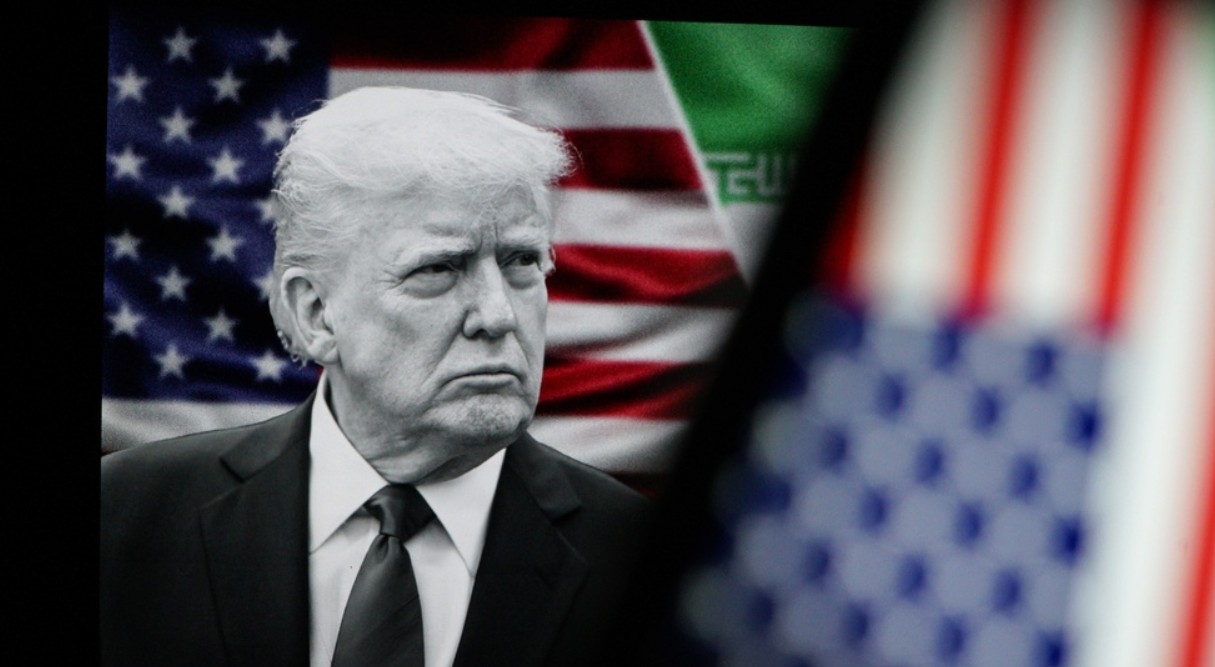
The preliminary agreement between the United States and Iran, announced by President Donald Trump on the evening of his birthday, like a spectacular gift shared with the rest of the world, is a new twist in the tragic strategic soap opera which opened in the Middle East on October 7, 2023.
The surprise, extremely deadly attack carried out that day by Hamas against civilians, within Israel itself, certainly changed the face of the region and in the worst way: by hastening the move to widespread military action, with a continued expansion of the war zone, and consequences that are still difficult to calculate for the entire world economy.
Time to take stock
American and Israeli voters, who are gradually losing confidence in their leaders, heads of state and government allied to the United States, summoned to align, world opinion, taken hostage by inflation and the deluge of war crimes, are beginning to take stock. But what have we achieved so far with this operation in Iran? Between conflict fatalism and surges of American voluntarism, the “new Middle East” promised by Benyamin Netanyahu from the fall of 2024 is partly revealed, but is slow to stabilize; and if the landscape has indeed changed, it appears even more hostile than before.
It must first be noted that the agreement announced on June 14 explores the same avenues as the interim agreement obtained in 2015 by the joint efforts of Barack Obama and his Russian, Chinese and European counterparts (Germany, France, United Kingdom). Donald Trump broke what he called “the worst deal in history” in 2018, plunging Europeans into the unknown; relations subsequently continued to become strained with Russia and China, making any return very difficult.
Then the president attempted to renew diplomatic negotiations with Iran at the start of his second term, displaying a mysterious optimism which was shattered by the Israeli conviction that the time had come to do battle with the mullahs.
The direct confrontation with Iran therefore took place, in two stages – the “twelve-day war” of June 2025, and the conflict jointly launched by Israel and the United States in February 2026, which it is premature to declare closed. Since then, the three belligerents have each claimed victory in their turn.
But if each of the three regimes believes itself to be victorious, the real losers are for the moment the Iranians, victims of both the ruthless repression of the regime and the American bombings, the million civilians driven from their lands in southern Lebanon, whose villages are reduced to ashes by the Israeli army, and the tens of thousands of dead. caused by Israeli operations in Gaza. This is the first important lesson: while societies in the Middle East have clearly expressed for years their fatigue with war, civilians suffer first, lastingly, and without any decent humanitarian compensation, the fallout from conflicts.
Iran in a position of strength
Other strategic parameters have changed in a spectacular way, giving rise to new elements which will weigh more and more heavily. First of all, Iran has expanded its deterrence system, initially based on its ballistic capacity – not entirely destroyed despite the American-Israeli strikes – and on its regional affiliates, still very active, since, in addition to Lebanese Hezbollah and the Yemeni Houthis who operate in the Red Sea, pro-Iranian militias have indeed struck Saudi Arabia from Iraq.
If the Iranian regime can today present itself at the negotiations paradoxically in a position of strength, it is because its drones have been able to strike vital infrastructure among its Arab neighbors in the Gulf, and because the blockade of the Strait of Hormuz has taken the world economy hostage. Harassment of the UAE has proven to be a very effective and relatively inexpensive tactic for maintaining control.
This is the second striking element: today the Arab economies of the Gulf, which we saw as an essential link in globalization, are in quarantine; practically reduced to the rank of buffer zone between Israel and Iran. The notion of “existential threat”, which was believed to be reserved for Israel in the face of the Iranian regime, must now be extended to Kuwait or Bahrain, whose seawater desalination plants have been hit by the Iranians.
Third remarkable element: the willingness of regional powers to mediate. If Pakistan has established itself as leader, weakening in the process the position of the India of Narendra Modi, fully aligned with the Netanyahu government, it has imposed itself in quartet with Saudi Arabia, which also seeks to influence the Lebanese issue, with Turkey, which is worried about its Iranian border and wants to consolidate its position in Syria, and with Egypt, until now diplomatically prevented by the situation in Gaza.
[…]
Read the rest of the article on the Le Monde website.