The Trump administration is forcing Latin American governments to submit to arbitration tribunals that grant multinational corporations extraordinary power to sue states that nationalize resources or even simply raise the minimum wage, if doing so is perceived as a threat to investor profits.
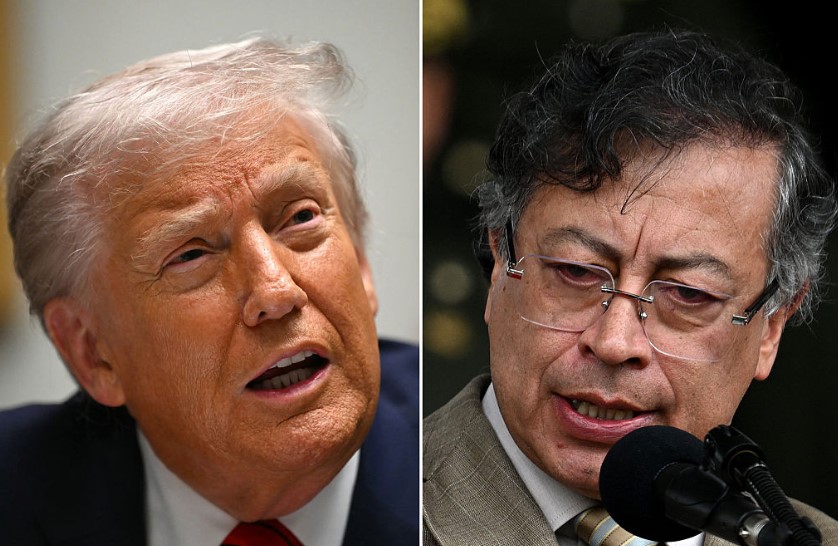
- The Trump administration is actively promoting arbitration under “investor-state dispute resolution” in South America, sanctioning everything from environmental protections to raising the minimum wage through crushing fines imposed on states by investors. (Andrew Caballero-Reynolds and Raul Arboleda / AFP via Getty Images)
Venezuela’s new large-scale mining law, adopted on April 9, is the most recent in a series of national “reforms” intended to help rebuild the country’s energy and mining sectors. It follows years of crippling US sanctions and disinvestment, which saw the mining centers of Amazonas, Bolivar and Delta Amacuro states handed over to “criminal organizations”. But buried deep within the law’s text is a historic concession that will redefine Venezuela’s relations with multinational energy and mining companies for the foreseeable future, a mandate under which Caracas must submit to investor-state dispute settlement (ISDS) through arbitration.
By agreeing to settle commercial disputes before extraterritorial courts, the Venezuelan legislature, under the presidency of Delcy Rodríguez, agreed to renounce an essential pillar of its authority. As part of an ISDS type system [Norme internationale visant à normaliser la description des fonctions dans tous les domaines, NdT]multinationals in the energy and mining sectors would be granted the extraordinary power to sue the Venezuelan state in the event of the adoption of measures such as environmental protection or increasing the minimum wage, which could be perceived as a threat to “expected future profits “. These are both procedural and political tools, widely encouraged by development banks and the US government, which aim to discourage the formation of socialist states and encourage the formation of “lower risk” states.
This arbitration clause constitutes a huge setback for the Bolivarian project of nationalization of resources as a whole. Venezuela perfectly illustrates the success of the Donroe Doctrine strategy, which consists of transforming countries like Bolivia and Ecuador into secure and “investor-friendly” raw materials producing countries. By pressuring states to accept arbitration rulings that could result in fines of hundreds of millions of dollars, under the implicit threat of sanctions from the US Treasury, the Bretton Woods institutions can curb the ambitions of future leaders who promote economic sovereignty, by strictly defining the scope of the policy interior.
ISDS-type mechanisms are poised to become a litmus test for sovereign governance in the Andean region, establishing a clear distinction between leaders who defend the right of people to benefit from the riches offered by nature and those who, under pressure, dismantle their constitutions to facilitate mining foreign. As revealed by Colombian President Gustavo Petro’s recent decision to withdraw Colombia from this investor-friendly arbitration system, American hegemony in the region could, however, have its limits.
Reforms favorable to the market economy in the Andes
The standard arsenal of the Donroe Doctrine consists of providing diplomatic and political support to right-wing candidates in Andean countries, notably in Argentina, Chile and Ecuador, by offering them military cooperation, advantageous bilateral trade agreements and investments through development banks, in exchange for “pro-government” reforms. market” once in power.
In the case of Bolivia, President Rodrigo Paz has reversed decades of economic and social progress made under nearly twenty years of socialist rule. Since coming to power under the banner of “capitalism for all”, Paz has sharply reduced fuel subsidies, opened the soy market for export, negotiated loans from the IMF and weakened worker protection. He has also worked to facilitate transnational mining investment and extraction of Bolivia’s extraordinarily abundant lithium reserves, known for their high capital requirements,
Additionally, Paz threatens one of the world’s strongest legal bulwarks against imperialism through a “supreme decree.” For almost two decades, the Bolivian Constitution has explicitly stipulated that commercial disputes must be resolved within the framework of sovereign jurisdiction; if Paz gradually undermines the spirit of this clause by approving individual “strategic investments” that conform to ISDS-type rules, he will have succeeded in aligning La Paz, Caracas and Quito, while leaving Bogota isolated in its defense of economic sovereignty.
When coercion fails, the “Donroe Doctrine” resorts to violence, as it did most spectacularly during the invasion of Venezuela in January. “Operation Absolute Resolve,” which left at least eighty people dead and aimed to illegally kidnap President Nicolas Maduro and First Lady Cilia Flores on baseless accusations of drug trafficking, constituted an unprecedented use of military force in North America. South. She also played a key role in reforms to the country’s oil and mining sectors, while serving as a warning to the rest of the region: get in line, or else…
The Trump administration continued this strategy by bombing the border region of Colombia in joint operations with the forces of Ecuador. By focusing military support and political capital on the increasingly intense “war on drugs” led by Ecuadorian President Daniel Noboa, the Pentagon is replicating the failures of a decades-old approach that fails to address the economic causes of the problem, and in fact makes them worse.
At the same time, Noboa is trying to provoke an economic crisis in Colombia before the upcoming elections. By imposing 100% tariffs on Colombian products starting May 1, Noboa cuts a vital trade artery that runs directly through southwest Colombia, a crucial stronghold of the left-wing “Historic Pact” coalition. President Petro recently accused members of the opposition of colluding with Noboa to aggravate this crisis; Ã lvaro Uribe, leading figure of the Colombian right, would have visited Ecuador just a few days before the announcement of the new customs duties.
Not far from the coasts of this border region, the American army has recently intensified its strikes against boats suspected of “drug trafficking”. This policy of extrajudicial executions, which also targeted the Caribbean, left at least 180 dead. The instability generated by all of these policies supports the argument that transnational capital needs greater “legal certainty”, via ISDS-type arbitration, to operate in the region.
The extension of ISDS-type arbitration is not limited to guaranteeing advantageous contracts for capital in the energy and mining sectors. It also undermines solidarity within the Andean Community, ensuring that the Andes continue to play a subordinate role in the global value chain and “outlawing” both resource nationalization and high-value industrialization.
However, whatever the excessive ambitions of the Donroe doctrine, the American imperialist project is far from being invincible.
Colombia at the forefront
Last March, President Gustavo Petro made the historic and bold decision to initiate Colombia’s withdrawal from Investor-State Dispute Resolution (ISDS) mechanisms, such as the World Bank’s International Center for Settlement of Investment Disputes (ICSID). He acted in this way under the impetus of hundreds of economists from both traditional and non-conventional schools. At the time he made his announcement, Colombia had more than $14 billion at stake in disputes that developing countries almost always lose.
By rejecting arbitration, Petro preserved Colombia’s national resources and protected its transition to sovereign green energy. He also highlighted the double standards that characterize the ISDS tribunals, which allows countries in the North to reject them while many countries in the South must submit to their jurisdiction as a prerequisite for obtaining loans. In his announcement, he argued that if several other countries have already “renounced this type of arbitration, including the United States, I do not see why Colombia would not do the same.”
This is in line with the attitude of Petro, who has continued to question the geopolitical dictates of the United States and Europe, in particular through his repeated condemnations of the aforementioned “war on drugs”, his refusal to ship weapons Colombians in Ukraine, his desire to strengthen economic integration with the BRICS bloc and, above all, his decision to break all diplomatic relations with Israel.
By withdrawing from the ISDS courts and pursuing a non-aligned foreign policy, Petro also showed the region’s leaders that it was possible to defend its economic sovereignty, even in the face of a direct military threat. This explains why the Trump administration persists in wanting to discredit him.
A complex geopolitical reality
This struggle is taking place in a changing global context, which is undermining the long-term solvency of the US empire. Trump’s illegal war against Iran is poised to drive up global inflation, accelerating the trend of central banks abandoning the dollar. While Trump administration lawyers examine the Bolivian constitution, looking for clever ways to open the Andes to the World Bank, soldiers in the Persian Gulf are trying to reinforce the financial supremacy of the United States with bombs, paradoxically threatening any future investment.
Thus, if ISDS arbitrage remains formidable in theory, the geopolitical reality as a whole is much more complex. The United States is pushing Venezuela before extraterritorial courts in order to impose fictitious fines that they may soon no longer have the necessary military and economic capacity to enforce.
Caught between an oil supply crisis in the Middle East and insatiable global demand for strategic minerals, transnational capital is now destined to return to Venezuela. The Bolivarian Revolution was, at its core, a project of resource nationalization rooted in the belief that the free gifts of nature could serve as a gateway to prosperity and sustainable development. Having gutted all meaningful protections in the Venezuelan Constitution, the legislature has now entirely subordinated the raison d’être of the state to the “de-risking” needs of transnational capital in the energy and mining. This resulted in a strange but functional result after years of coup attempts and US sanctions: winning the war against the Bolivarian state through the Bolivarian state itself.
*
Logan McMillen writes foreign policy analyzes from the perspectives of critical political economy and geography, focusing on Latin America. His articles have been published notably in The New Republic et Responsible Statecraft.
Source : Jacobin, Logan McMillen, 03-05-2026
Translated by readers of the Les-Crises website
We offer this article to broaden your scope of reflection. This does not necessarily mean that we approve of the vision developed here. In all cases, our responsibility ends with the comments we report here. [Lire plus]We are in no way committed by the comments that the author could have made elsewhere – and even less by those that he could make in the future. Please, however, notify us via the contact form of any information concerning the author which could harm his reputation.Â


:fill(black)/2026/06/12/6a2bf72c44adf656066407.jpg "Scènes de fêtes au Mexique pour louverture du Mondial")