lediplomate.media – printed on 05/26/2026
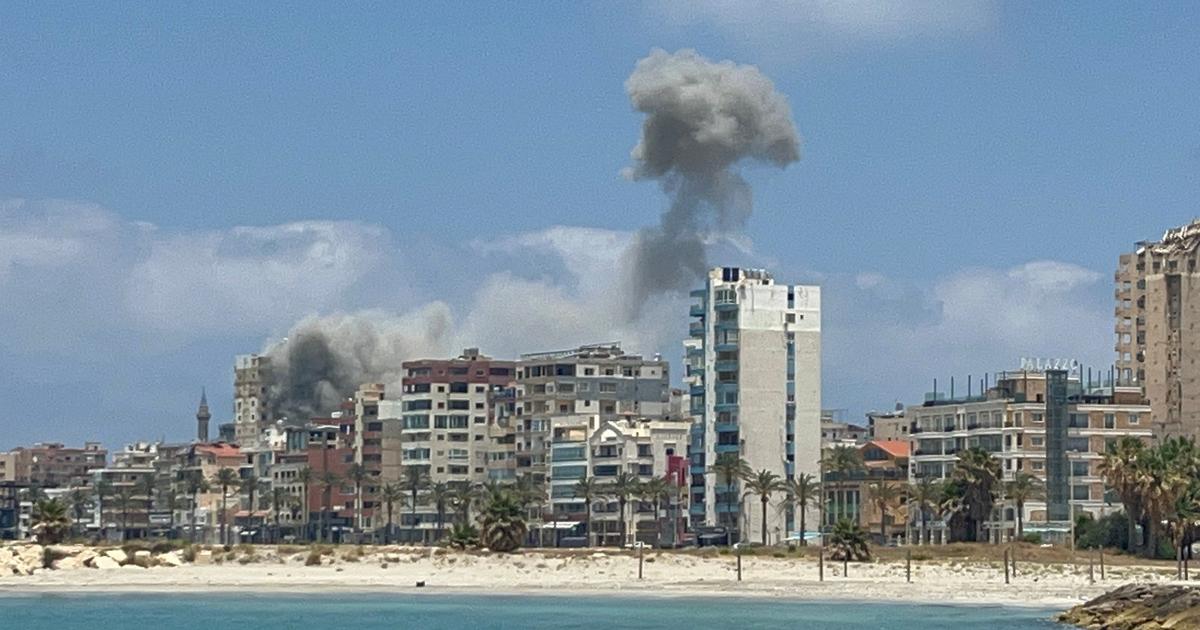
The international system is going through a phase of brutal recomposition marked by the return of high-intensity conflicts, the fragmentation of geopolitical balances and the progressive weakening of security frameworks inherited from the post-Cold War era. Between the confrontation between Israel, the United States and Iran, the bogging down Russo-Ukrainian war, the strategic tensions between Washington and Beijing and the persistent destabilization of the Sahel, the global balance of power seems to be entering a new era of lasting confrontation.
In this context, the meeting scheduled for May 15, 2026 between Donald Trump and Xi Jinping in Beijing appears to be a major diplomatic moment. Commercial rivalries, technological competition, energy war, Ukrainian crisis and Indo-Pacific tensions now structure the relationship between the two main world powers.
At the same time, Africa and particularly the Sahel remain areas of strong strategic instability, where jihadist terrorism, state collapse, rivalries for influence and the gradual decline of the French presence intersect.
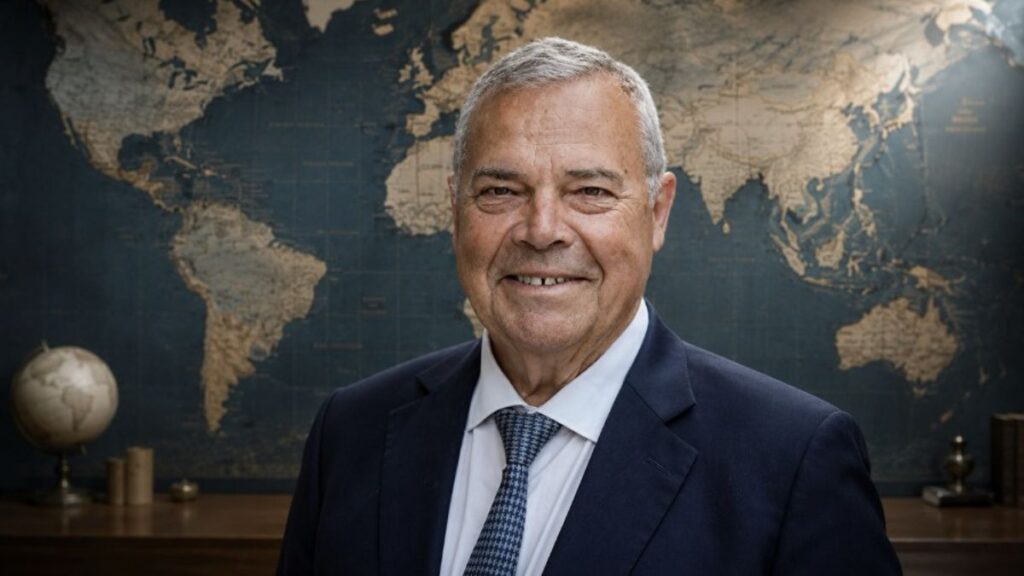
To analyze these major geopolitical upheavals and their military and strategic implications,The Media Diplomat met Peer de Jong once again. Former colonel of the Marine Troops, expert in conflict dynamics and co-founder ofl’Institut Themius.
Comments collected by Roland Lombardi
Le Diplomate :Â For several years, high-intensity conflicts and the balance of power between great powers seem to be once again becoming central to international relations. In your opinion, have we entered a new historical phase of lasting global confrontation?
Peer de Jong : The irruption of Russia into Ukraine in 2022 was highly destabilizing in relations between states. This is the first time that a P5 country has invaded its neighbor… This is destabilizing for Ukraine obviously but also for Europe which sees a conventional conflict taking hold on the continent. The threat is no longer virtual. An aggravating factor, this invasion produces induced effects. Donald Trump, newly elected in January 2025, immediately withdrew on the aid to be provided to Ukraine while advocating a new geopolitical logic centered on the American continent; a form of the Monroe Doctrine revisited called the “Donroe Doctrine” in reference to the first name of the American president. By materializing his area of interest and influence on Greenland, Canada, Panama and Mexico (and incidentally on Venezuela and Cuba…) during his inauguration speech in January 2025, Donald Trump recognizes the possibility of other great powers, Russia and China, exercising their influence on their respective geographic areas. Almost a “drawing right” which highlights, with the almost permanent veto of Russia and China in the United Nations Security Council, a sort of end of international law.
The war between Israel, the United States and Iran has profoundly destabilized the Middle East and reignited global energy tensions. How do you analyze today Washington’s real strategic objectives in this confrontation?
The war launched by the United States and Israel on February 28, 2026 against Iran presents several characteristics. We first note the influence of Prime Minister Netanyahu on the American executive while the latter seemed after the bombings of June 2025, rather inclined to let “the situation rot”. The riots of January 2026 in Iran were also in line with American logic. Obviously, pushed by the Israelis who obviously have their own agenda, the American forces launched on February 28, 2026, a military operation which presented two negative characteristics. Indeed, unpreparedness without warning the NATO allies and lack of planning (space-time framework and desired final effect?) characterized the initial assault on Iran. The American “shock and awe” doctrine (shock and awe), based on the crushing of the enemy and his inability to react, was not effective. These initial mistakes could be corrected by the redefinition of a clear objective: that of denying Iran access to military nuclear power. This objective is in line with those of China. Discussions are ongoing…   Â
Also read:EXCLUSIVE – The Big Interview with Reza Pirzadeh –  Between conventional war and hybrid war: the drivers of Iranian resilience
Despite Western strikes, Iran appears to have demonstrated a strong capacity for political, military and regional resilience. In your opinion, does this sequence constitute a limited success for the United States or does it reveal the current limits of American power?
This Iranian resilience first demonstrates the very good capacity for anticipation of Iran, which had visibly prepared for a conflict of this level (tunnels, buried installations, etc.). Furthermore, Iran had clearly concealed the progress made in the field of ballistics. These two strong points combine in the use of means. On the other hand, the United States, despite the very high level of the American army, demonstrates several weaknesses: first of all the lack of appreciation of Iran’s forces (linked largely to “contempt” Americans on Iranian capabilities/Trump speech). This state of mind has led to a lack of appreciation of Iranian capabilities. During the first weeks of the conflict, the United States thus seemed totally out of step with reality. Finally, the United States suffered the double Iranian maneuver: that of the blockade of the Strait of Hormuz and that of the massive so-called saturation fire of missiles and drones on the countries of the Persian Gulf. The American forces suffered the tempo of Tehran revealing the limits of the use of military force.
Concerning the Russo-Ukrainian war, the conflict now seems set in a logic of prolonged attrition. How do you assess today the real state of Russian and Ukrainian military forces after more than four years of war?
After 4.5 years of war, we have clearly entered a phase of crystallization of the conflict. On the ground, we note a slowdown in the westward movement of Russian forces while the Ukrainians resist and even manage to regain ground. Thus the Ukrainian forces recaptured more than 100 km2 in April 2026. This stabilization of the front indicates wear and tear on the belligerents despite the declarations of all. On the other hand, the war has moved to another level. The Russians and Ukrainians are now waging a deep war that resembles a war of attrition. Drones and missiles are being exchanged at a particularly high rate and are causing significant destruction, including energy installations. These shots in depth actually cause very significant collateral damage.
Donald Trump had promised to quickly end major international conflicts after his return to the White House. Why do the United States today seem incapable of imposing lasting stabilization both in Ukraine and in the Middle East?
On Ukraine, two visions clash in the United States. The first advocates a form of objective sharing of the world and the stabilization of the conflict on Russian conditions. Donald Trump led the way by expressing his interest in Ukraine. For him, the United States must focus on the American continent which is their area of interest. He thus gives a blank check to China to act in Asia, just as he attributes a dominant role to Putin in the central zone, that is to say in Europe and Africa. This is the “real political” vision of sharing the world.
The motivation of Europeans to collectively commit to Ukraine opened the way for a mercantile vision in the United States. As Europe no longer has the defense industries capable of meeting kyiv’s demands, the United States places itself in the position of supplier of arms to the Ukrainians but purchased by European states. It is an economic model which claims to be virtuous in Washington but which is gradually pushing Europe into a policy of subjugation to American conditions. The NATO summit on July 7 and 8, 2026 in Türkiye promises to be complicated. Â
The war in the Middle East reveals significant flaws within the American army but without prejudging its capacity to lead a conflict. The United States army remains the most powerful model… but altered by the procrastination of the American executive.
Also read:DECIPHERED – Putin receives Araghchi: Iran seeks Moscow, Gulf becomes center of global crisis
Could the meeting between Donald Trump and Xi Jinping in Beijing open a phase of strategic stabilization between Washington and Beijing or should we rather see a simple tactical management of a systemic rivalry set to last?
China is gradually becoming the global “control tower” of peace and war. And if China shares great power status with Russia and the United States, it is not engaged in a hot conflict. It does not make the American and Russian mistake of being defeated by weaker countries like Iran and Ukraine. China understood, probably before anyone else, that military nuclear power only deters military nuclear power. But coming up against a specific country like Iran or Ukraine, and therefore waging an asymmetrical fight, gives a systemic advantage to the weakest as soon as they use “rudimentary” weapons and in large numbers. The ability to last does the rest.
You know African and Sahelian issues particularly well. After the decline of French influence in Mali, Niger and Burkina Faso, can France still become a credible player in Africa in the face of the rise in power of Russia, China or Turkey? And how do you analyze the comeback of jihadists in Mali in particular?
France lost all of its territorial “positions” between 2022 and 2025. The French system evaporated in 3 years with the exception of Djibouti which is rented. This major loss of influence is akin to a loss of credibility. This state of affairs has opened wide the doors of Africa to all our competitors, whether they are Americans, Russians, Turks, Israelis, Chinese and of course Europeans. This observation of failure does not come only from the impossibility for Operation Barkhane to deal with the question of jihadism in the Sahel. It comes from a recurring stream of errors committed since 1994 – from the war in Rwanda, to the devaluation of the CFA franc without informing the States, to the suppression of the Ministry of Cooperation but also from blunders like the humiliating Dakar speech in 2007 or from errors like the war in Libya in 2011, etc… France has become more gentrified in its relationship with Africa in a context of the rise in power of the European Union since the Treaty of Lisbon which gives it broad prerogatives at the same time as significant budgets. Africa has become attractive to everyone. present solutions to the rise of Islamist terrorism which is plaguing the Sahel, Central Africa and ultimately the countries of the Gulf of Guinea. The door has also opened for international jihadists who can now foresee the creation of a caliphate in the heart of the continent. Â
Finally, in a world marked by the rise of blocs, the return of wars and global economic tensions, in your opinion, does France still have the military, diplomatic and industrial means allowing it to preserve true strategic autonomy?
France obviously has the military, diplomatic and industrial means to preserve or even amplify its strategic autonomy. Unfortunately, France is entering the period with a catastrophic budgetary situation which effectively limits its capabilities while dividing French public opinion. Finally, Europe understood that it could not count on the Americans and Trump to protect them. NATO is no longer the alliance hoped for by Europeans at the end of the Second World War. Trump signaled the end of the idea that Europeans could consume peacefully without making the necessary efforts to protect it. It’s a bit like the story of the “three little pigs” and the awareness of the need to invest massively in defense issues. This awareness actually causes an exacerbation of intra-European competition. The Germans are now asserting their desire to be “leader” in the defense of the continent by equipping themselves with the largest European conventional army, while Poland seems to have identical claims. We must therefore maintain the very high technological level of our military nuclear model while strengthening the conventional forces undermined since the Army 2000 reform and the RGPP, the general reform of public policies dear to President Nicolas Sarkozy. But with what budget?
Also read:ANALYSIS – Trump threatens China with “big problems” over Iran: on the eve of the summit with Xi, Washington toughens its tone
#PeerDeJong, #TheDiplomateMedia, #Geopolitics, #Wars, #GlobalChaos, #InternationalRelations, #WorldPowers, #UkraineWar, #RussiaUkraine, #Iran, #Israel, #United States, #MiddleEast, #DonaldTrump, #XiJinping, #China, #WashingtonBeijing, #NewWorldOrder, #HighIntensityConflicts, #MilitaryStrategy, #Defense, #StrategicAutonomy, #NATO, #Sahel, #Mali, #Niger, #BurkinaFaso, #Africa, #Jihadism, #Terrorism, #Russia, #FranceAfrica, #InternationalSecurity, #EnergyWar, #IndoPacific, #InternationalLaw, #MultipolarWorld, #GlobalCrisis, #GeopoliticalAnalysis, #ExclusiveInterview