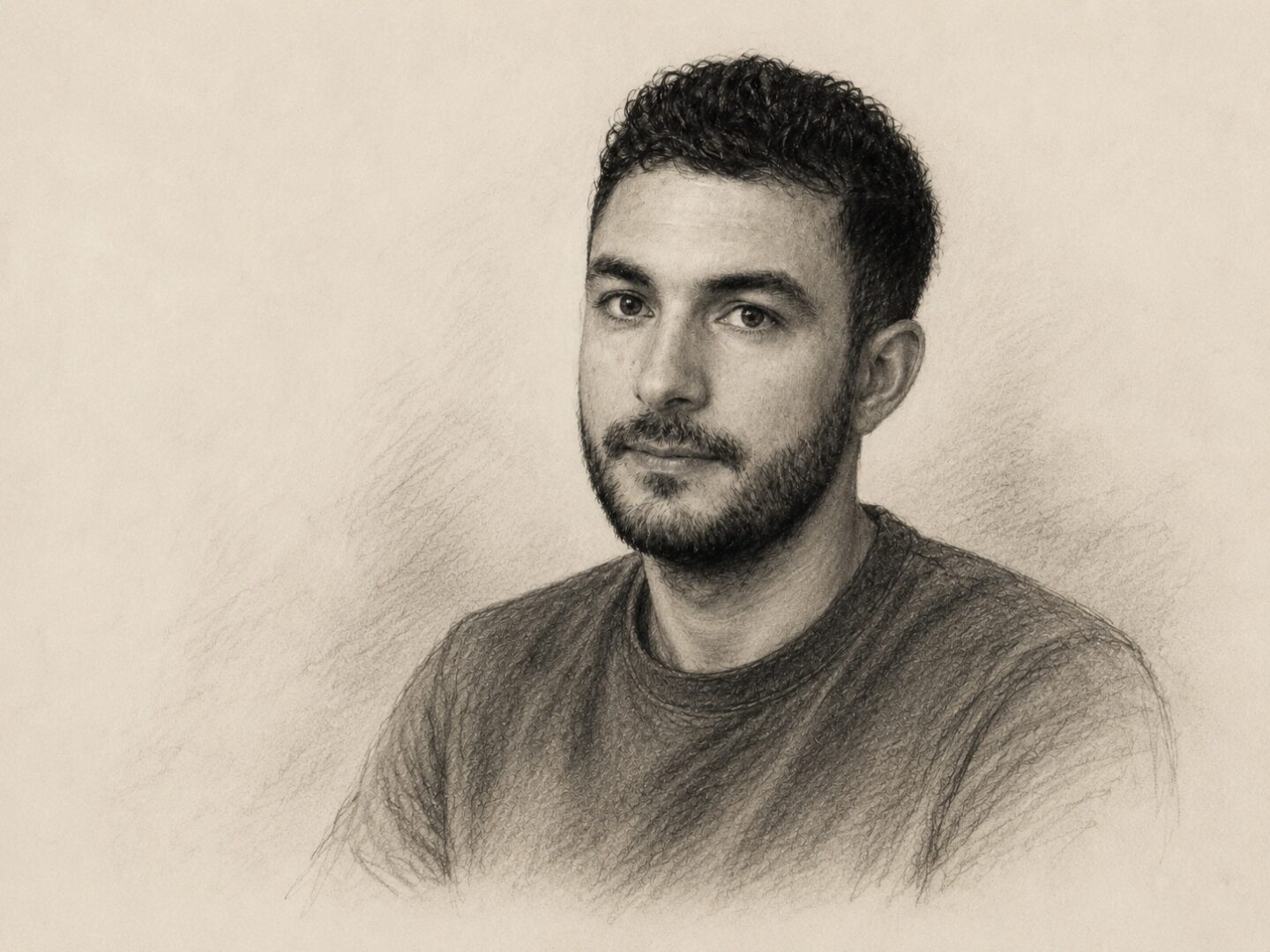
The trial which opens in Rennes, from May 26 to June 12, 2026, at the Parliament of Brittany, brings together nine men who appear before the Assize Court specially composed of Ille-et-Vilaine for the attempted murder targeting Mahammad Mirzali, an Azerbaijani blogger and opponent who took refuge in France.
At first glance, the setting imposes its story. A historic courthouse, filtered access, a reinforced security perimeter, strict controls, a victim placed under permanent protection. Everything seems to point to an “extraordinary” trial. But the expression, too convenient, risks masking the essential.
The Mirzali trial is not only an ultra-secure trial. This is a case of transnational political violence brought before French justice. It questions the capacity of the State to protect foreign opponents taking refuge on its soil, the difficulty of tracing those responsible to those giving orders, and the way in which certain authoritarian regimes can extend their repressive power well beyond their borders. The Parliament of Brittany becomes, for three weeks, the judicial theater of a distant conflict which found in Nantes its place of blood, and in Rennes its possible place of truth.
A refugee man, but never really safe
Mahammad Mirzali left Azerbaijan to escape a political system whose methods he denounced. Blogger, videographer, opponent of President Ilham Aliev, he notably hosts Made in Azerbaijanonline media critical of Baku’s power, corruption, attacks on public freedoms and violence against dissident voices.
In France, he should have found what asylum promises in its most elementary principle: distance, refuge, breathing. But his exile was transformed into an assignment to fear. Based in particular in Nantes, he claims to have received numerous threats. His case is followed by organizations defending press freedom and human rights, who see in him one of the most worrying examples of these opponents whom exile no longer fully protects.
This reality says something about our time. Borders protect less than we think. Authoritarian regimes, their relays, their clients or their networks of influence no longer necessarily need tanks or embassies to make their pressure felt. Fear travels through telephones, through intermediaries, through henchmen, through monitored diasporas, through cash, through anonymous threats. She moves fast, often faster than the right one.
Nantes, March 14, 2021. A knife attack in broad daylight
The criminal heart of the case dates back to March 14, 2021. That day, in Nantes, on the Quai de la Fosse, Mahammad Mirzali was attacked in broad daylight. He received numerous stab wounds, notably to the neck and arms. He survived after a major operation, but the attack left behind profound after-effects.
The scene is not a simple news item. It targets a man already identified as a political opponent, already threatened, already exposed. A few months earlier, in October 2020, he was targeted by an armed attack in Nantes. In 2022, other men were intercepted near Angers, when they appeared to be heading towards his home. The file therefore tells less of an isolated episode than of a continuity of threat.
Since then, Mahammad Mirzali has lived under increased police protection. He is alive, but his ordinary life has been confiscated. Each move becomes a procedure. Every public appearance, a risk. Each speech, an act of defiance. The political refugee is protected by the Republic, but this protection is also a cruel sign that the promise of security could not be fully kept.
Nine accused, roles to be established
In Rennes, nine men are tried. Some are presented as presumed members of the commando, others as support or logistical relays. They appear in particular for attempted murder or complicity, in an organized gang, as well as for criminal association according to the qualifications mentioned in the case.
Caution is required. The accused remain presumed innocent. The process must establish individual responsibilities, distinguish levels of involvement, measure what relates to execution, assistance, preparation or participation in a structured group. In this type of affair, the temptation of the big story is strong. Justice must come back to evidence, actions, telephones, journeys, weapons, presences, silences and contradictions.
This is precisely where the trial becomes decisive. A democracy cannot respond to political violence with indignation alone. It must produce law, that is to say proof. It must transform the fear into a file, the suspicion into elements, the injury into a procedure, then the procedure into a judgment.
The question that haunts the audience: who did it?
The trial will not only seek to know who struck. He will have to approach, as much as possible, a more difficult question: who would have wanted Mahammad Mirzali to be silenced? In cases of transnational repression, the visible arm is not always the brain. The alleged perpetrators can be identified, prosecuted and convicted. The order givers often remain in gray areas, sheltered from the successive screens which separate the crime from its political interest.
The shadow of Baku hangs over the case, but a shadow is not proof. This distinction is essential. It protects the rigor of the trial as much as it reveals its difficulty. The Azerbaijani regime is regularly accused by NGOs of harshly repressing its opponents, including beyond its borders. Mahammad Mirzali was himself convicted in absentia in his country. But the court will have to judge men, acts and established responsibilities, not a geopolitical atmosphere.
The whole point is there. Do not reduce the matter to a common law attack. Do not too quickly decree a state truth that the audience has not demonstrated. Between these two pitfalls lies the narrow path to justice.
Transnational repression, the new face of political violence
The Mirzali case is part of a broader phenomenon. Opponents, journalists, bloggers, lawyers, activists or former political leaders who have taken refuge in Europe sometimes continue to be monitored, intimidated, pursued or attacked. Exile is no longer always a break. It sometimes becomes an extension of the threat territory.
The assassination of Vidadi Isgandarli in Mulhouse, another Azerbaijani opponent who had taken refuge in France, reinforced this concern. This tragedy reminded us that the protection of exiled dissidents is not just a matter of democratic generosity. It involves the sovereignty of the host state. When an opponent is threatened in France for what he says about a foreign power, it is not only his individual freedom that is attacked. It is also the authority of French territory as a legal space.
Transnational repression thrives in the interstices. It borrows from organized crime, political intimidation, informal intelligence, community surveillance, forced solidarity and opaque debts. She rarely walks forward with her face uncovered. She prefers intermediaries, distant cousins, available men, small hands, discreet trips, disposable telephones, whispered threats. It blurs the categories, and that is why it challenges democracies.
A trial of democratic sovereignty
Rennes is not only the administrative location of this hearing. The Parliament of Brittany, a building of history and justice, becomes the setting for a much more contemporary question. Can a man be hunted down in France because he criticizes a foreign power? Can a political refugee be reduced to living under permanent escort? Can a democratic country protect those it welcomes without simply repairing attacks after the fact?
France knows how to offer asylum. She also knows, in certain cases, how to deploy impressive police protection. But the Mirzali affair reveals a deeper tension. Protecting an exiled opponent is not just about preventing their death. It is also allowing him to live, to speak, to move, to not become a prisoner of the threat that targets him.
Permanent protection saves a body, but it does not always restore existence. It maintains life, but it does not entirely restore freedom. It is this tragic area that the trial highlights.
In Rennes, law against fear
For three weeks, the specially composed Assize Court will have to examine the facts, hear the accused, listen to the civil party, compare the versions and assess the responsibilities. The trial may not answer all the questions. It may not clear up all the gray areas. It may not go back to potential sponsors. But it can produce one essential thing: a judicial truth, limited, demanding, enforceable.
In an era saturated with stories, propaganda and indirect violence, this judicial truth has major political value. She doesn’t scream. She doesn’t take revenge. She doesn’t simplify. She establishes. She names. She distinguishes. It convicts, if the evidence allows.
The Mirzali trial is therefore much more than a criminal hearing under high security. It is a test posed to French democracy. Can it prevent foreign political conflicts from being settled on its territory by knives, fear or henchmen? Can it protect those who believed they would find refuge in its promise of asylum? Can it make the Parliament of Brittany not only a place of judicial memory, but a place of regained sovereignty in the face of imported violence?
Nantes was the site of the attack. Rennes becomes the place where we try to understand its logic. Between the two, the same question runs through the file: how far can the hand of a foreign power go when one of its opponents believes he has found refuge in France?


/2022/12/02/638994d9d5adf_61168cfc8256bf7ea5ef3720-1.png "DIRECT. War in the Middle East: Iran responded to Washington’s overnight strikes by targeting American military bases")