Many dedicated Israel educators believe that keeping pace with the latest headlines from Jerusalem and Gaza delivers a meaningful connection to the Jewish state.
There is virtue to their position, as long as they don't get carried away. Chasing the news cycle may feel urgent and relevant, but it falls short of genuine Israel education.
Â
True Israel education does more than report.Â
It transmits the constant principles that have defined Zionism since its earliest days.
It immerses students in the full sweep of Jewish and Zionist history, from the biblical kingdoms through two thousand years of exile and longing, from the stirrings of modern Zionism at the end of the 19th century to the desperate struggles of the Yishuv, the miracle of 1948, and the difficult decades that followed.Â
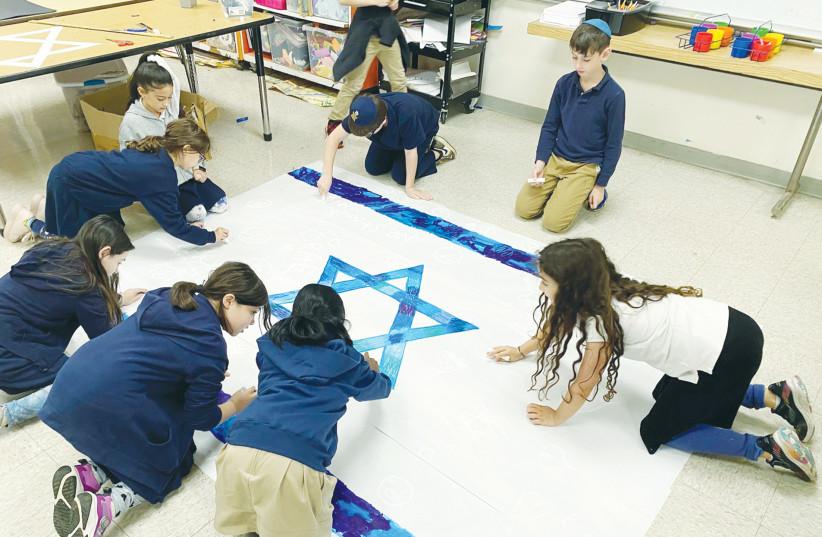
It offers a broad, elevated perspective that reveals patterns and purpose amid the chaos of events.
Teaching current events serves a more immediate function. It keeps students aware of what is happening right now. It functions as a briefing, helping young Jews stay connected to the world.
No one wants our children detached from the realities shaping people's lives.
Yet a briefing, no matter how detailed, cannot substitute for education. Without historical grounding and ideological depth, students see only fragments. They understand the symptoms but not the underlying condition.
The risk runs deeper than incomplete knowledge.
Beyond the news cycle
When our classrooms obsess over the latest developments, we unintentionally suggest that Zionism has already completed its work. The state was founded, the army was built, and sovereignty was achieved.
Now the story reduces to crisis management, another attack, another debate, another wave of condemnation. The grand, ongoing drama of Jewish return and renewal slips away.
Students absorb the quiet sense that the Zionist project reached its climax decades ago, and everything since is simply a reaction.
The events of the October 7 massacre during Simchat Torah in 2023 illustrate the gap between these two approaches with painful clarity.
A current-events lesson often begins and ends with the horror itself. On that quiet Shabbat morning, Hamas terrorists smashed through the border fence. They murdered more than 1,200 people and seized 251 hostages.
The images that emerged seared themselves into our collective memory. Students leave the class informed, shaken, and angry. They grasp what happened and feel the raw wound.
But they often lack the framework to answer the deeper questions of why this savagery? What does it reveal about the Jewish condition in our time? How should we respond not just as mourners but as Zionists?
Israel education approaches the same day differently. It situates October 7 within the long continuum of Jewish vulnerability and resilience. The massacre did not emerge from nowhere.
It echoed the pogroms that convinced Herzl and Jabotinsky of the necessity of Jewish power, the Arab riots of 1929 that tested the Yishuv's will, and the Holocaust that proved exile offered no permanent shelter.
It confirmed, in the most brutal way imaginable, the foundational Zionist insight that a people without sovereignty will always remain at the mercy of others. Yet the response reaffirmed Zionist principles in action.
Reserve soldiers left their civilian lives within hours. Communities pulled together across political divides. Debates raged, not over whether to fight, but how to fight while remaining true to Jewish ethics.
The biblical command “If someone comes to kill you, rise early and kill him first†found new meaning in the fields surrounding Gaza.
Students who receive this fuller education see both the tragedy and the affirmation. They understand that October 7 did not disprove Zionism; it reconfirmed its urgent necessity.
The Jewish people did not return to the land merely to escape history but rather to engage it as free actors.
They learn that Israel's successes, technological ingenuity under fire, democratic debate amid crisis, continued immigration even as sirens sounded, flow from the same values that built the state. They also confront the failures honestly. This honesty deepens the students' attachment.
Â
The same principle applies across every flashpoint. Teaching judicial reform or settlement policy as breaking news produces heated but shallow discussion.Â
Placing those issues within the century-long Zionist argument over the character of the Jewish state gives students perspective. A briefing on diplomatic agreements or boycott campaigns keeps students current.Â
Connecting them to the enduring tension between security and morality equips students to think as heirs to a tradition, not spectators to headlines.
Teaching Israel in context
Educators who mistake the news cycle for curriculum may produce engaged followers of events, but they miss the opportunity to form rooted Zionists. Young people flooded with daily updates often react with passion yet lack the intellectual steadiness needed when facing sophisticated criticism or their own doubts.
Those who have internalized the long view move differently. They carry the quiet confidence that comes from knowing Israel's full story, including its light and its burdens, its triumphs and its ongoing struggles.
This does not mean discarding current events. They have an essential place, but only as an illustration within a larger framework.Â
The thoughtful teacher weaves today's crisis back into the tapestry, teaching how it echoes 1948, how Zionist values shape our choices, and how Jewish history prepares us for what lies ahead.
Only then does the present enlighten rather than overwhelm the student. Jewish teaching has always favored depth over immediacy. The Torah embeds every incident in covenant and destiny.
The sages argued across generations, never allowing the crisis of the hour to erase eternal questions. Zionism emerged from precisely this kind of honest, unflinching engagement with reality. Our classrooms must honor that inheritance.
Israel educators must teach the unchanging principles. They must teach the history that gives every headline its weight and offer the broad view that transforms raw information into understanding.
When they do this, students will not merely follow events as they unfold. They will see their own place within the continuing Jewish story, a story that did not conclude with independence and will not be defined by any single massacre or victory.
They will emerge not as consumers of news but as conscious participants in a living Zionism, connected to Israel not only by emotion but by knowledge and conviction.
The Jewish people have never needed this more. In a world that often reduces Israel to soundbites and slogans, we owe our students the fullness of their heritage. That fullness remains the surest foundation for both understanding and love.
The writer is a Zionist educator at institutions around the world. He recently published the book Zionism Today.