This paper analyzes the global geography of religions through a geopolitical reading of confessional dynamics. The author first proposes a typology of States according to their religious composition. The study then shows that religious distributions result as much from historical legacies as from migrations, conflicts, public policies or secularization phenomena. Then, via the examples of India, Nigeria, Russia, Western Europe and China, the paper highlights how religions influence internal balances, identity tensions and international relations. Finally, the author highlights the rise of “no religion” people and the growing difficulty of precisely measuring religious affiliations.
The examination of maps, which are intended to represent the geography of religions in the world, provides few explanations except sometimes the highlighting of religious continuity in certain regions of the world between neighboring countries. Furthermore, given the geographical entanglement of religions in many territories in the world, cartography remains crude and even very detailed maps have difficulty presenting reality. There also remains an essential question, that of real knowledge of religious affiliation. Indeed, the latter is only available in detail in a few countries, such as India, thanks to the results of censuses in which one of the questions relates to religion, without being able to specify the degree of religiosity.
Understanding the geography of religions therefore relies on indirect collections such as surveys. It is this work that allows the Pew Research Center to offer estimates, for each country or territory in the world, of the religious distribution of the population by distinguishing five main religions: Christianity, Islam, Buddhism, Hinduism and the Jewish religion. These estimates also distinguish a class which brings together all religions other than the five indicated and a category entitled “without religious affiliation”. On a global scale, Christians, the most numerous, are ahead, as a proportion of the world population (figure 1), by approximately three points of Muslims and by 4.6 points of those without religion. Then, Hindus represent almost 15% of the population in the world, far ahead of the three other distinguished types which count less than 5% (Buddhists) or much less than 1% (Jews).
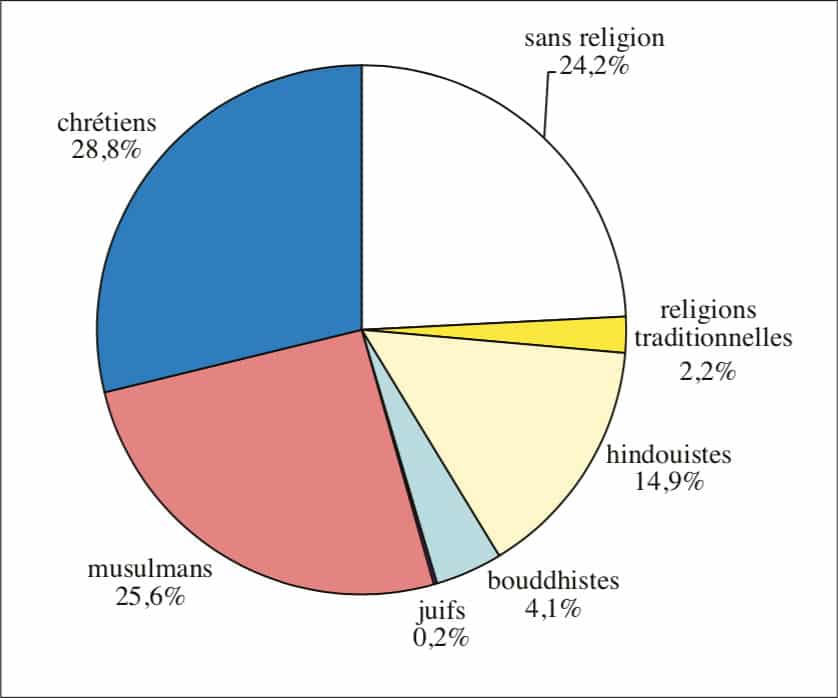
Figure 1. Religious distribution in the world –
© GeÌrard-François Dumont – chiffres Pew 2020.
But this global distribution of religions shows great diversity depending on the country. We therefore propose a typology allowing us to distinguish six categories. The first, which we call “uniconfessional”, concerns countries characterized by strong religious homogeneity. The second groups together countries where there is a majority of the population adhering to the same religion which is therefore dominant, but a minority of the population does not adhere to it without necessarily forming a compact geographical whole. We then propose, to name these countries, to designate them as “dom-religious”, therefore with a dominant religion but whose share is insufficient for the country to be considered homogeneous from a religious point of view.
The third category concerns countries which have been unidenominational, but which are no longer so, given the rise of people without religion and/or of a non-historically present religion carried by immigrants and their descendants. We designate these countries with a “contested domestic-confessional” tendency. There are also countries where one religion is dominant but which have, for a long time, sometimes several centuries or even more than a millennium, had a significant religious minority clearly observable due to its importance or its geography, which does not allow them to be designated as unfaithful. We refer to them as “unequal bi-confessionality”.
When the country has essentially two religions with a high proportion of followers, it falls into a fifth category of “bi-faith” countries. If the religious spectrum distinguishes at least three religions with a significant proportion of followers, the countries – sixth category – are “multi-faith”. Finally, there are particular cases that are difficult to classify in terms of religiosity, like China, which deserves specific examination.
These diversities in the geography of religions in the world depending on the country can be explained by various factors, some of which date back to distant events. But the central question asked in this text is to underline how this geography is often found in geopolitical explanations, internal and/or external, and always in interaction with contemporary geopolitical realities.
The categories defined above therefore lead to the distinction of several types, each of which can be illustrated by numerous examples, without however providing here an exhaustive overview of all the countries of the world.
Unifaith countries
In 43 countries, 95% or more of the population adheres to the same religion. Considering this 95% limit to define a country that we call “unifaith”, the so-called Mena region (Middle East and North Africa – Middle East and North Africa) is very well represented. Indeed, many countries in this Mena region are predominantly Muslim; Morocco, Algeria, Tunisia, Libya, Saudi Arabia, Yemen, Jordan, Iraq… Added to the north-east of the Middle East, Azerbaijan This uniconfessional character is sometimes part of a centuries-old history dating back to the first decades of Islam and the wars of religious conquest. which accompanied this period, as in the Arabian Peninsula and, beyond, in Mesopotamia, the Near East and northern Africa.
But, in other countries, such as Turkey, the very high percentage of Muslims, i.e. 97.1% of the population, is quite recent, a legacy of the Armenian and Assyro-Chaldean genocide of the 1910s and the geopolitical events of the 1920s under the effect of what was not yet called ethnic cleansing, established by the Treaty of Lausanne of 1923. The latter was accompanied by a forced emigration from Turkey of around 1.5 million Orthodox Greeks, some as early as September 1922 after the fire of Smyrna following the entry of Mustafa Kemal’s Turkish forces on September 9, and around 400,000 Muslims leaving Greece. These forced migrations excluded Greeks from Istanbul and Muslims from Western Thrace, a region integrated for centuries into the Ottoman Empire and returned to Greece by Bulgaria in 1923.
Then the emigration of Greeks from Istanbul subsequently continued under pressure from Ankara in contravention of the Treaty of Lausanne on the rights recognized by Orthodox Greeks. This led, in a few decades, to the religious homogenization of a previously multi-religious land, during the time of the Ottoman Empire.
As Greece respected the Treaty of Lausanne, the country is not uni-confessional, despite 89.5% Christians, but semi-confessional, with 5.1% Muslims making up a strong minority in Western Thrace where they have their own educational and legal system, which, it is true, gives rise to periodic tensions and legal battles over the law applicable to individuals.
To the east of this MENA region, among the unidenominational Muslim countries, Iran deserves special examination. The country is estimated by the Pew Research Center to be 98% Muslim, the vast majority of whom are Shia. The 10% of Sunnis live mainly on the outskirts of the state, either in the Kurdish region, in the South-West, or in Baluchistan, while the number of Zoroastrians and Jews has decreased significantly and a small Armenian minority remains.
represented by two elected representatives in Parliament. However, Iran is an example of the question of the degree of religiosity in a context characterized by a theocratic regime since 1979 and a won fight against the Islamic veil since 2022. Indeed, according to a Fondapol survey, 47% of Iranians claim to have broken with the Muslim religion. This percentage, which contravenes Pew Research Center data, could be explained by dissatisfaction with the theocratic governance of the country.
To the east of Iran, in South Central Asia, two countries, Afghanistan and Pakistan with 97% Muslims, the remaining 3% divided between Christianity and Hinduism, also fall into this unifaith category. In the northern half of sub-Saharan Africa, Muslim unity also dominates almost entirely from Senegal to Somalia via Mauritania, Mali, Niger and Sudan, with the exception of Chad and Ethiopia.
In certain countries, such as Turkey analyzed above, Muslim unity may be due to more contemporary geopolitical changes. The creation of Pakistan in 1947 was accompanied by forced cross-displacements: on the one hand, the departure of almost all Hindus and Sikhs (around eight million) who lived in the borders of the country which had become independent, especially in West Punjab and Sindh; on the other, according to an East-West migration, with the arrival in Pakistan of around seven million Muslims from India. This created a strong religious homogeneity in Pakistan, a homogeneity which has since become more pronounced (97% Muslims in 2020) because the small Christian minority continues to suffer oppression and violence, pushing it to emigrate.
Algeria, which became independent in 1962, implemented ethnic cleansing causing the forced departure of more than a million inhabitants who were Christian, Jewish or without religion. The measures taken by the regime against non-Muslim religions, mainly Christian, such as being punishable by conviction for the simple possession of a Bible, result in the maintenance of strong religious homogeneity.
The unidenominational character (Shiite Islam) of Azerbaijan is also recent. Indeed, the Armenian minorities who lived there had to flee the country at three main periods in recent decades: after the Sumgait pogrom in 1988, during the open conflict in Nagorno-Karabakh from 1991 to 1994, then under the constraint of ethnic cleansing complete protection of Nagorno-Karabakh in September 2023. In Iraq, following the discrimination and violence suffered, a large majority of inhabitants of the Christian religion, although present for two millennia, emigrated and the country became unifaith.
On the side of Christianity, the number of countries that can be classified as unfaithful has decreased, especially since the second half of the 20th century, due either to the increase in the proportion of people without religion, or to the installation of immigrants practicing a non-Christian religion leaving liberticidal countries or suffering from poor governance harming development, without forgetting their descendants. In addition, Christian countries that are still unidenominational often have a limited number of inhabitants, such as the following countries: Romania, Poland or Serbia in Europe; Peru in Latin America; Angola or Namibia in Africa. Another example in Western Asia with Armenia, a country with less than 3 million inhabitants, but benefiting from strong adherence to an Armenian Apostolic Church, independent of Rome because it is no longer in communion with the Roman Catholic Church since the Council of Chalcedon (451). However, one of the most populous countries in Africa, Congo DRC, is unidenominational with 96.3% Christians.
In terms of its number of inhabitants, Mexico was another counter-example of a populous country, with more than 100 million inhabitants, and yet unidenominational Christian. But its proportion of Christians is estimated to have decreased from 95% in 2010 to 89.2% in 2020, due to the increase at the same time in those without religion from 4.8% to 10.6%. Mexico must therefore now be classified in the following category, that of countries with a domi-confessional tendency.
Countries with a domi-confessional tendency
In “dom-confessional” countries, the dominant religion accounts for between 80 and 94% of the population. The second religion can form a geographically compact minority in part of the territory, which can have geopolitical implications, or, given the size of the country’s population, represent a significant demographic weight.
This type of country is found in particular in Asia or Latin America. In South Central Asia, Bangladesh falls into this category, even if the Muslim religion has become the official religion there since 1988. Indeed, the weight of 91.1% of Muslims should not mask the importance of the 7.9% of Hindus, or around 13 million inhabitants, a relative weight which has however decreased with a number of emigrations to India in a context not very open to religious freedom.
In South-East Asia, Indonesia is 87% Muslim, with non-Muslims divided into different faiths (Christianity resulting from evangelization during European colonization – representing 10.3% of the population, Hinduism from descendants of people recruited in India as labor during Dutch colonization, Buddhism, animism…). In Oman, the majority is Muslim at 81.8%, and the country is 8.1% Christian and 9.5% Hindu, most of which is the result of labor migration from India.
Still in South-East Asia, the Philippines is also a semi-confessional country because, in addition to the 91.5% of Christians, there is a minority of 6.5% of Muslims which is the majority in the south on the island of Mindanao and in the neighboring archipelagos of Sulu and Tawi-Tawi, with the effect of internal geopolitical tensions having gave rise to violence.
Thailand offers another example of this category with a domi-confessional tendency with 94% Buddhists, because there remains a Muslim minority representing 5.0% of the total population and locally a majority in certain regions of the far South, along the border with Malaysia, in the provinces of Pattani, Yala and Narathiwat. And this regional religious compactness has given rise to insurrectional actions with a separatist objective since the 2000s. Then, with 89.1% Buddhists, 6.1% Christians and 3.3% Muslims, Myanmar (Burma) constitutes the fifth country entering this category.
In Western Asia, it is geopolitical history that allows us to understand the religious composition of Israel with 77% Jews, 14.7% Muslims and 1.9% Christians, percentages very different from those existing both in the year of the country’s independence (1948) and in the decades previous ones.
Then, in Latin America, in Brazil, 80.7% of the population is attached to Christianity. The second and third groups are the non-religious and the spiritualists. In Africa, the Pew Research Center estimates that Egypt is 95.2% Muslim and 4.8% Christian. But, on the one hand, these percentages seem to minimize the weight of the Copts, most often estimated at around 10% of the population and whose presence is attested by numerous churches, despite the restrictions often placed on their construction, and even if the Copts have experienced waves of emigration in the most difficult periods. unfavorable to religious freedom. On the other hand, this minimum percentage of 4.8% of Christians means a population of at least 5 million, a figure obviously lower than the 13 million Copts (the vast majority of Egyptian Christians) according to the head of the Coptic Orthodox Church Tawadros II, but higher than the population of many countries in the world.
The next category, countries with a contested domi-confessional tendency, is often the result of relatively recent processes.
Countries with a contested domi-confessional tendency
This category includes countries which have long been historically unifaith, but where this characteristic is called into question either by the importance of those without religion, or by the strong growth of another confession, or by both. This category includes many Western or Latin American countries.
Thus, Italy could have long been classified as unidenominational with a proportion of 98% Catholics still at the start of the 21st century. But, according to 2020 data from Pew Research Centerthis percentage fell significantly below the 95% threshold, precisely to 80.5%. And this proportion would have been further reduced if, among its immigrants, Italy did not also include Romanians, Ukrainians of Christian faith, Ethiopians, Filipinos or black Africans coming from Christian lands. As for immigrants from predominantly Muslim countries and their descendants, they account for a proportion of 4.4% of Muslims while those without religion rose to 13.3%. One of the reasons for these developments is in Italy, as in many European countries, that the reception of immigrants is part of international obligations, the result of the accession of these countries to the Geneva Convention on the right of asylum, to the European Convention on Human Rightsto the regulations and directives of the European Union, or to the case law of the European Court of Justice (CJEU) and the European Court of Human Rights (ECHR), without forgetting national case law including, as in France, that of the Constitutional Council.
In North America, let’s first consider the United States, a country whose demographic dynamics have diminished. The share of Christians fell to 64.0% in 2020 compared to 78.3% in 2010, Christians who are divided into multiple Protestant, Evangelical or Pentecostal churches, without forgetting the Mormons, and the Roman Catholic Church. The share of Catholics, long marginal before the 1840s, increased with Irish immigration in the middle of the 19th century, then increased in recent decades with Latin American immigration. According to 2020 estimates, non-Christians in the United States fall into two groups: 29.7% of no religion, then a diversity of religions, including Jews, approximately 1.7% of the United States population, Muslims, 0.9%, and other people adhering to religions from South Central Asia and Eastern Asia (Buddhists, Hindus…). The low estimate of the percentage of Muslims could possibly be explained by the policies of President Trump. However, among immigrants, the presence of Africans has increased, particularly with a significant community of Senegalese whose routes they take to get to the United States have been detailed. The de-Christianization of Canada is more intense, with the percentage of Christians lowered to 53.3%, while those without religion rose to 34.6% of the population and Islam concerns 4.9% of the population in 2020 compared to 3.2% in 2010, an increase linked to the country’s immigration policy enacted each year by the Ottawa Parliament, supplemented by decisions specific to the Quebec authorities.
In South America, the great historical majority has been Christian since the Spanish and Portuguese colonizations of the late 15th and 16th centuries and the evangelization that accompanied it. But, in the 21st century, it is reduced with the rise of those without religion. For example, in Argentina, the percentage of Christians fell to 88.5% in 2020, knowing that 9.2% have no religion. In Colombia, it is now 86.2% due to the rise to 9.9% of those without religion. In Brazil, it is 80.7% due to the same effect of the increase in those without religion which reaches 13.5%.
In Asia, in Japan, the estimate of Pew Research Center gives Buddhism as the main religion (37.2% of the population), compared to 57.5% without religion. But there seems to remain a Shintoist background in the majority of the population. In Vietnam, the majority remains attached to Buddhism (67.7%) while there remains, despite pressure from political authorities, a Christian minority (8.3% of the population) and those without religion have fallen to 23% due to less diffusion of the atheist ideology of diet.
The phenomenon of the rise of people without religion appears clearly in South Africa and in several European countries such as Italy cited above. In South Africa, the challenge to Christian preeminence (85.3%) comes from this rise of the non-religious (8.9% of the population), while there remain confessional diversities explained by the population of the country (Hinduism linked to the descendants of migrants from the Indian subcontinent and desired by the British colonizer, Islam, Buddhism…). In Europe, in countries like Germany, France, and the United Kingdom (Table 1), it is Christianity that is being strongly contested both by the rise of non-religion and by the growth of Islam imported by the migratory system, itself linked to realities geopolitics. Thus, the presence of Islam in Germany is explained in particular by the construction in 1961 of the Berlin Wall which pushed West Germany, after the end of the arrival of active population from East Germany, to negotiate the arrival of Turkish workers whose presence, planned as temporary, was perpetuated in particular with the arrival of families based on a geographically limited interpretation of article 8 of the European Declaration of Human Rights.
Table 1. Religious distribution in Germany, France and the United Kingdom
© Gérard-French Dumont – 2020 Pew figures.
| In percentage   | Christians | Sans religion |
Muslims | Other religions | Â Total |
| Germany | 56,2 | 36,1 | 6,5 | 1 | 100 |
| France | 46,5 | 42,6 | 9,1 | 2 | 100 |
| United Kingdom | 49,4 | 40,2 | 6,4 | 4 | 100 |
Â
For its part, France has also established generous conditions for immigration in general, such as the widest range of care for immigrants in an irregular situation, or for those from Algeria. As for the United Kingdom, its immigration laws have made it relatively easy for Muslim populations from countries in the Commonwealth.
Furthermore, without going into details, to understand the evolution of the religious distribution of the three European countries cited above, it is difficult not to consider the historical importance of policies essentially unfavorable to the Catholic religion and a certain sustainability of their influence sometimes leading to confusion secularism and secularism, including in certain jurisdictional decisions: English texts with a view to favoring Anglicanism; Culture battle(1971-1875) by Bismarck meaning, for example, tight control of the training of priests or the expulsion of the Jesuits from Germany; eradication of many religious people under Hitler; closure of religious congregations in France (1902-1903) and appropriation of their property by the State… In the Netherlands, the evolution of the religiosity of the descendants of Christians and the settlement of immigrants from countries of the South now put Christians in a minority position at 35.1%, facing 54.1% of no religion and 5.5% of Muslims.
In the Scandinavian countries, in Norway, Christians remain in the majority, with however a share lowered to 71.4%, while two increases brought the proportion of those without religion to 22.5% and Muslims to 4.1% in 2020 compared to 2.5% in 2010. In the neighboring Scandinavian country, the In Sweden, the shift away from Christianity was more intense with 60.8% Christians in 2020 compared to 72.8% in 2010, despite the arrival of Christian immigrants, such as Chaldeans from the Middle East. The share of those without religion rose to 28.9% and that of Muslims to 8.1% in 2020 compared to 4.5% in 2010. These Muslims come from recent immigration flows, only since the 1980s, with the arrival of Iranians, Bosnians, Iraqis or Syrians (1980s). 2010). In Denmark and Finland, developments are similar.
In the center of Western Europe, Switzerland has percentages roughly comparable to Sweden: 61.6% Christians, 30.8% no religion and 6.1% Muslims. Neighboring Austria has the same orders of magnitude, respectively 68.2%, 22.4% and 8.3%. However, on a geopolitical level, in this country as in others, it is appropriate not to consider the Muslim minority as homogeneous; for example, by studying only immigrants of Turkish origin, they do not align with the same Muslim theology depending on whether they are Sunnis with allegiance to the Turkish Ministry of Religious Affairs (Religious), Kurdish Sunnis unfavorable to Erdogan’s Islamic regime linked to the Muslim Brotherhood, or Alevis, a heterodox branch of Islam. In Portugal, the share of Christians decreased less (85.1%), notably due to Christian immigrants from Romania, Ukraine or Brazil, but nevertheless suffered from the increase in the proportion of those without religion, to 13.8%.
The three categories previously considered are followed by three others, starting with those characterized by egalitarian or not bi-confessionality.
Bi-faith countries
Among the different countries of the world, several can be described as bifaith, such as Nigeria, Ethiopia, or the Ivory Coast. Nigeria, the most populous country in Africa, finds itself in a unique situation with proportions similar to those of the whole of Africa: 56.1% Muslims, 43.4% Christians, the rest of the population being classified as animists. Ethiopia, which has exceeded 100 million inhabitants since 2015, is predominantly Christian (61.6%), but 36.2% of the population is classified as Muslim. Finally, South Korea, also the country with the lowest fertility in the world, is divided between Buddhism (19% of the population) and Christian faiths (32%), the rest of the population being classified as having no religion (48.3%).
Ivory Coast also falls into this category of bi-faith countries with 44.0% Christians and 46.3% Muslims. In Europe, it is Bosnia and Herzegovina, which is part of this category with 44.7% Christians, overwhelmingly Orthodox and corresponding to people of Serbian ethnicity, and 53.6% Muslims, resulting from immigration or conversions linked to the colonization of the country by the Ottoman Empire in the 15th century. century, replacing the independent Christian kingdom of Bosnia.
Multi-faith countries
We find multi-faith countries, in the sense that they share at least three religions, each of which has a significant proportion, on several continents, with two emblematic cases linked to their geopolitical and migratory history. Thus, Mauritius has 32.9% Christians, 17.5% Muslims and 48.3% Hindus, the latter two groups often being the descendants of Indians recruited in particular in the 19th century by the British as labor in sugar cane plantations. In Singapore, the most numerous religious group, Buddhists, often descendants of Chinese immigrants recruited in the 19th century by the British East India Company, is far from being in the majority, with only 30.8% of the population because all members of the Chinese diaspora, approximately three-quarters of the population, are not Buddhists, since the non-Buddhist population is divided between no religion (19.9%), Christians (18.8%) and Muslims (16.1%).
In South America, it is Suriname, a sparsely populated country with significantly less than 1 million inhabitants, which has strong religious diversity. Indeed, even if Christians are in the slight majority (52.8%), 22.5% of the population is attached to Hinduism and 13.1% to Islam.
In Asia, Taiwan also has a heterogeneous religious situation, with 23.1% of no religion, 19.2% of Buddhists, 5.5% of Christians and a slight majority (51.7%) reporting other religions.
In Africa, in Benin, the Pew Research Center estimates a small majority of Christians (53.2%) and a significant share of Muslims (31.4) but the share of other religions (10.5%) is relatively high while those without religion have a significant weight (4.9%). Guinea-Bissau has a majority of Muslims (56%) but its religious heterogeneity is explained by the share of Christians (21.7%), other religions (10.7%) and those without religion (11.6%). Togo has a comparable dispersion but with other religious affiliations, i.e., alongside the Christian majority (56.9%), 19.0% of other religions, 16.1% of Muslims and 8.0% of no religion. In this country, as in most countries in the Gulf of Guinea, namely Nigeria, Benin, Ghana and the Ivory Coast, Christians are in the majority in the southern part of the country and Muslims are mainly present in the northern part.
China, a special case
Among the countries cited above, China is not included, where the Communist Party has reigned since 1949. In the context of a very authoritarian, even totalitarian, political regime, knowledge of the geography of religions is particularly difficult to understand. Here, it is an academic book on China which is intended to be a reference and which does not say a word about religion. There, on such a map, we distinguish a Western half considered Taoist and Confucianist and an Eastern Buddhist half, without forgetting Muslims, especially in the western part of the country (Xinjiang) and the Tibetans, present not only in the so-called autonomous region of Tibet. Elsewhere, figures are given which lead to classifying 89.6% of the population as non-believers, but this does not mean that such a percentage stays away from all spirituality.
In fact, Buddhism and Taoism, combined with the philosophy of Confucianism, form a popular religion varying according to region, but having in common the worship of ancestors. In addition, Christian minorities, despite their low acceptance by a regime that harshly controls them, exist. The result is that China is difficult to classify, even if it is rather multi-religious. Only the implementation of religious freedom, today very improbable, would make it possible to clearly analyze religious distribution.
These elements, making it possible to present a religious typology of countries, can form a basis of analysis for projections up to 2050. They show how numerous interactions between religion and geopolitics are today as they have been in history, including during historical conflicts (Poitiers, Reconquista, Lepanto, seats of Vienna in Europe; Talas, Manzikert, Jerusalem, Talikota in Asia; Because the examination of the geography of religions in the world and its developments requires taking into account both the geopolitical dynamics of the past and those of today.



/2026/05/23/6a1215d58fc02658194116.jpg "F1 : George Russell partira en pole position du Grand Prix de Canada, devant son coéquipier Kimi Antonelli")