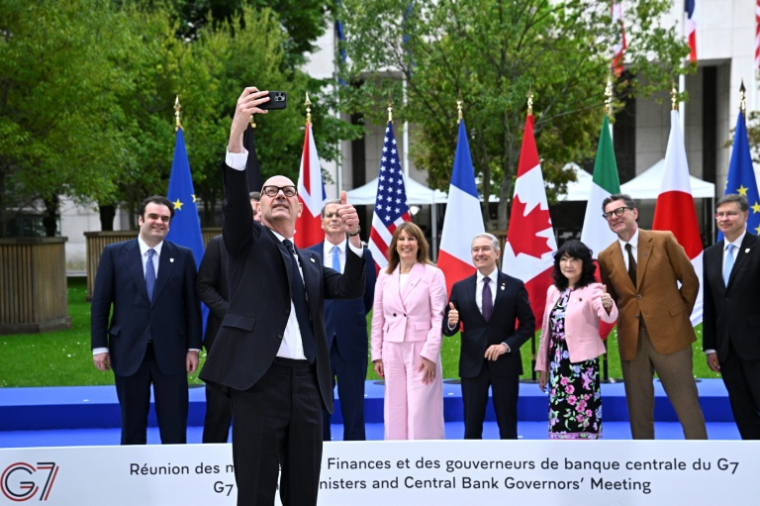
Economy Minister Roland Lescure takes a selfie during the traditional group photo of G7 Finance Ministers and central bank governors, on May 18, 2026 in Paris (AFP / JULIEN DE ROSA)
The G7 Finance Ministers are meeting in Paris for two days, to try to reconcile their positions in the face of the economic repercussions of the conflict in the Middle East, and to free themselves from dependence on Chinese critical minerals.
“We are going to show that multilateralism is useful and that it works,” French Minister of Economy and Finance Roland Lescure declared to journalists Monday morning.
One month before the G7 summit in Evian (June 15-17), France wants to maintain the course of dialogue while geopolitical and commercial tensions are intensifying and undermining international relations, even with the American ally, which has become unpredictable under Donald Trump.
The latter, who once again threatened Iran with annihilation on Sunday, suggests an imminent resumption of strikes and the end of the fragile truce in force since April 8.
“We are facing major challenges, the war in the Middle East, obviously, multilateral imbalances which are unsustainable today, the issues of rare earths, critical materials, issues of development aid,” detailed Roland Lescure.
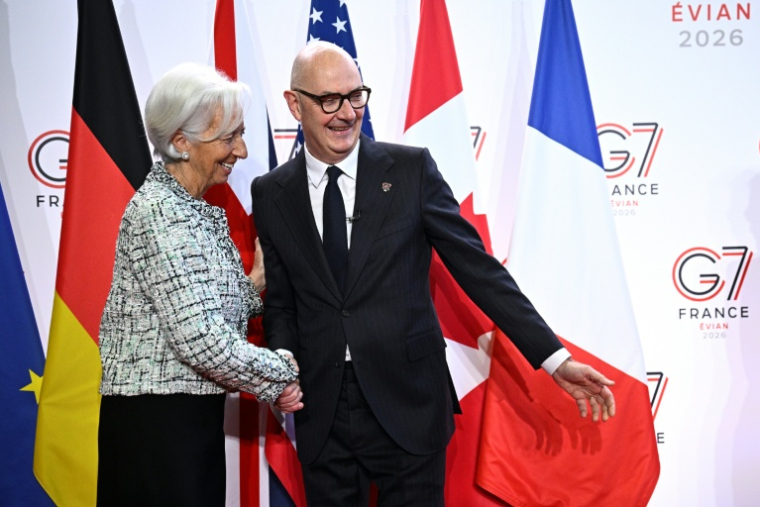
The President of the European Central Bank (ECB), Christine Lagarde, and the French Minister of the Economy, Roland Lescure, before the G7 meeting, Paris, May 18, 2026 (AFP / JULIEN DE ROSA)
“The way in which global growth is happening today is clearly unsustainable,” he said.
– “It’s my job!” –
In a press release, German Finance Minister Lars Klingbeil said that “the G7 is the appropriate framework to discuss these urgent issues with the United States and the other G7 countries.”
At the top of the priorities of the big financiers of the G7: the economic consequences of the war and of Iran’s blockage of the Strait of Hormuz, essential for the transport of hydrocarbons and fertilizers whose prices have jumped.
As a result of this situation, the International Monetary Fund (IMF) expects more modest global growth and higher inflation in 2026.
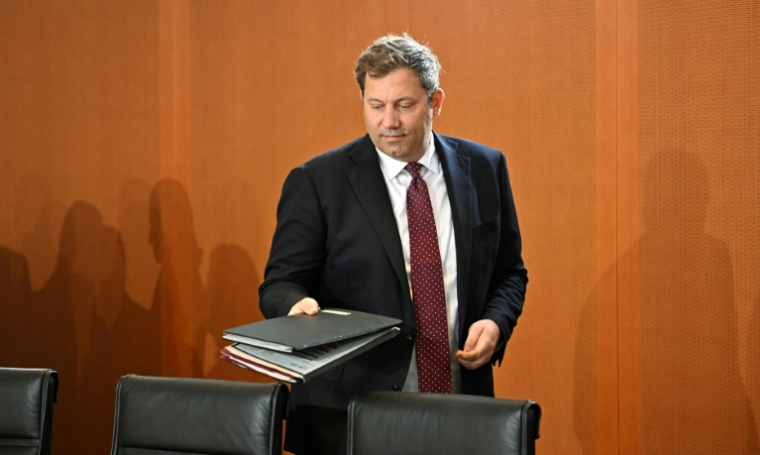
German Finance Minister Lars Klingbeil arrives at the Chancellery in Berlin on May 6, 2026 (AFP / Tobias SCHWARZ)
The head of the International Energy Agency (IEA), Fatih Birol, warned on Monday that there were still “several weeks” of commercial oil stocks remaining but that these were declining “very quickly”
A new release of strategic stocks, as in March, is however not on the agenda, according to Roland Lescure. However, he showed himself ready to “discuss” it if necessary in the near future.
These inflationary fears have generated in recent days a strong movement of sales of government debt securities, and therefore an increase in interest rates on sovereign debts.
Questioned upon her arrival at the G7 Finances, the President of the European Central Bank (ECB) Christine Lagarde said she was “always concerned, it’s my job!”
“We can do a lot (…) to calm the markets and instill a positive dynamic”, like “the discussions we are having here”, estimated the President of the Bundesbank, Joachim Nagel.
Faced with inflation, the general director of the IMF, Kristalina Georgieva, called for not taking “measures which would worsen the situation”.
– “Pressure” on Russia –
To mitigate the rise in oil prices, Washington had paused sanctions on Russian oil, linked to the war in Ukraine, until May 16.
“This is not the time to relax the pressure of sanctions against Russia. On the contrary, we must enforce and apply this pressure,” declared the European Commissioner for the Economy, Valdis Dombrovskis in statements echoing those of the Ukrainian Minister of Finance, Sergii Marchenko, present in Paris.
The ministers will also try to iron out disagreements on international trade, marked by American customs surcharges or Chinese industrial overcapacity, and to secure their supplies of critical minerals.
In recent years, producing and processing countries, led by China, have sometimes restricted certain exports of these essential components for entire sectors of the world economy, or taken advantage of their dominant position to influence prices.
In a context of commercial, geopolitical and financial tensions, a common recognition of the situation would already be considered a major step forward by the French presidency.
On the American side, Scott Bessent insisted on the meeting aimed at combating the financing of terrorism planned for Tuesday after the G7, with Iran in the crosshairs. “We call on all our G7 partners, and all our allies as well as the rest of the world, to comply with the sanctions regime in order to combat the illicit financing that fuels the uranium war machine and return the money to the Iranian people.”
This G7 meeting, which also brings together central bank governors from member countries, comes a few days after Donald Trump’s visit to Beijing, without major announcements.