- US and Iran exchange fire in Strait of Hormuz; Trump assures that the ceasefire “remains in force” and warns of “a lot of suffering” if the agreement is not signed
- Secretary Rubio speaks for more than two hours with Pope Leo XIV in an effort to ease historic tensions between the White House and the Holy See
- Arms manufacturers confirm with figures that German rearmament is very real: Rheinmetall posts record results and forecasts growth of 45% in 2026
- Victory Day ceasefires collapse as secret Russian GRU plan to supply fiber-optic drones to Tehran regime is revealed
- Trump confirms withdrawal of five thousand troops from Germany and warns of ‘much deeper’ reductions in Europe, with Spain, Italy and other allies in the crosshairs
- Ceasefire between Israel and Lebanon collapses in south with most intense escalation since signing
- Trump and Lula da Silva hold cordial meeting at White House, pave way for renegotiation of tariffs after months of frosty diplomacy
- Media rack
- Editorial
The day ending this week promises to be, according to this analyst, one of those pivotal days where several fronts evolve simultaneously, without the busy observer being able to discern whether it is a real turning point or a simple pause between two episodes of tension. On the Persian front, the ceasefire between the United States and Iran hung by a thread yesterday, with effective exchanges of fire around the port of Qeshm, in Bandar Abbas and at the naval checkpoint of Bandar Kargan, while Donald Trump, without blinking, declared that “the ceasefire is still in force “I will let you know when this is no longer the case” and warned that, if the memorandum was not signed, “there will be a lot of suffering.” Diplomacy takes place, paradoxically, on the edge of the cannon.
Meanwhile, Secretary of State Marco Rubio spoke for more than two hours yesterday with Pope Leo the story. Institutional diplomacy attempts – to use the words of the Jesuit Antonio Spadaro – to “cool the rhetoric”, an arduous task when one of the protagonists believes, with imperturbable obstinacy, that the other “endangers millions of Catholics”. Add to this the confirmation, via The Economist, of a secret plan by the Russian GRU to supply Iran with fiber optic drones intended for use against American troops; the spectacular results of Rheinmetall, which confirms by figures – and no longer by speeches – that German rearmament is real and sustained; Putin’s parades without tanks in Red Square on May 9 and the collapse of the truces concluded with kyiv; and the expected meeting, cordial but ambivalent, between Trump and Lula at the White House. We are, once again, faced with wars of variable temperature whose threads intertwine in a single day.
US and Iran exchange fire in Strait of Hormuz; Trump assures that the ceasefire “remains in force” and warns of “a lot of suffering” if the agreement is not signed
FaitsÂ
According to reports from Reuters, Fox News and CNN cross-checked during the day, US forces attacked Iranian military targets on Thursday in the port of Qeshm in the Strait of Hormuz, as well as in Bandar Abbas and the Bandar Kargan naval checkpoint in Minab. The Iranian state agency IRNA confirmed anti-aircraft defense activity west of Tehran and in the Chitgar district. The Mehr News channel reported crossfire exchanges throughout the southern province of Hormozgan, in Bandar Abbas, Bandar Khamir, Sirik and on the island of Qeshm itself. These attacks took place barely two days after Iran launched fifteen ballistic and cruise missiles against the Emirati port of Fujairah. Despite all this, President Trump declared from the Reflecting Pool at the Lincoln Memorial: “They played with us, we pulverized them,” immediately adding: “I will let you know when the ceasefire ends, otherwise you would see a big blast coming out of Iran “. The president reiterated his call for Tehran to sign the fourteen-point memorandum: “The discussions are going very well, but they must understand that, if it is not signed, there will be a lot of suffering; it could happen any day, but it might not happen. I think they want this deal more than me.”
Implications
The situation corresponds to what I called in my reports a ceasefire of variable geometry: formal hostilities remain suspended, but occasional kinetic exchanges – “below the threshold of retaliation”, in the words of General Dan Caine, head of Joint Chiefs of Staff – are accumulating at such a rate that the Pentagon has recorded more than ten Iranian attacks against American forces since the April 8 signing. The Trumpist doctrine combines, with paradoxical effectiveness, selective military pressure, permanent naval blockade and diplomatic negotiation via Pakistan; a combination which, in the hands of a Marco Rubio or a Steve Witkoff, could lead to historic success, but which, in its presidential oscillations, is dangerously reminiscent of the brinkmanship that the Cold War taught us to avoid. The paradox of decapitation – this mechanism by which a successful military operation but lacking a post-conflict plan ends up leaving a void that is filled by the worst actors of the regime itself – continues to loom: any agreement that would leave the ultraconservative troika of the IRGC intact (General Vahidi, Secretary Zolghadr and Advisor Rezaei) and will block the reformist wing of Pezeshkian will be doomed to failure from birth.
Perspectives and scenarios
Three scenarios are emerging on the horizon for the next ten days. The first, optimistic, envisages the signing of the fourteen-point memorandum in Islamabad or Geneva before the Trump-Xi summit on May 14 and 15, which would allow the American president to present an extraordinary diplomatic trophy on the eve of the mid-term elections. The second, intermediate and, according to this analyst, the most probable, provides for successive technical extensions of the ceasefire while the Iranian oligarchic-jihadist regime gains time and reorganizes itself – “Operation Trust Me Bro failed”, said spokesperson Ghalibaf in English – with the aim of preserve its enrichment program as much as possible. HAS
The third scenario, catastrophic, is based on a collapse of mediation which would relaunch Operation “Epic Fury” “at a much higher level”, in Trump’s own words. It is worth remembering, with the caution required by our profession, that we have already seen other truces collapse in the same region – notably the Easter ceasefire a month ago – and that terrorist regimes do not sign agreements: they take advantage of them.

Secretary Rubio speaks for more than two hours with Pope Leo XIV in an effort to ease historic tensions between the White House and the Holy See
FaitsÂ
The meeting, which was held Thursday at the Apostolic Palace – on the eve of the first anniversary of the pontificate of Leo R. Gallagher. According to official communiqués from the Vatican and the US State Department, the discussions focused on the war against Iran, the conflict in Lebanon, African crises and the situation in Cuba. The Holy See described the meeting as “cordial” and underlined “the need to work tirelessly for peace.” The sovereign pontiff, who declared Tuesday that the Catholic Church “has been rising for years years against all nuclear weapons,” presented Rubio with an olive wood pen – “plant of peace,” he said – the secretary, son of Cuban immigrants and practicing Catholic, presented the pontiff with a crystal American football bearing the seal of the Department This meeting comes after weeks of very virulent personal attacks by President Trump against the first pope born in the United States, whom he accused of “endangering many Catholics” because of his positions on Iran and his rejection of the use of nuclear weapons, as well as that after the public defense of the sovereign pontiff by Italian Prime Minister Giorgia Meloni, described as “unacceptable” by Trump.
ImplicationsÂ
The divide between the White House and the Holy See is not a trivial episode; it constitutes, in diplomatic terms, an anomaly without precedent since the end of the Cold War. That the first American pope in history has become one of the most visible critics of Trumpist foreign policy – and that the president, in response, attacks him personally – reflects a deep tension between two worldviews: the universalist morality of the Church, which defends migrants, refugees and people subjected to the suffering of war, facing a Trumpist realism which favors national security and geopolitical balance, without the humanist nuances which were also a distinctive characteristic of Ronald Reagan. The defense that Prime Minister Meloni – leader of the Brothers of Italy, a center-right group until recently a natural ally of Trump – made of the pontiff illustrates that the cultural and moral battle between the two poles does not respect traditional partisan divisions. It should be remembered that the pontiff denounced as “truly unacceptable” the presidential threat to “eradicate Iranian civilization”, an expression that no diplomat with common sense would have subscribed to.
Perspectives and scenarios
Marco Rubio’s ability to “bring the confrontation back to a more serene institutional register” – in the words, again, of the Jesuit Spadaro – constitutes one of the most delicate challenges of his mandate as Secretary of State. The internal poll which shows the erosion of Catholic support for the president, combined with the enormous personal popularity of Pope Leo XIV, should temper presidential ardor; However, recent experiences urge us to be cautious. The Gordian knot lies in the Iranian question: if the fourteen-point memorandum is finally signed, the Holy See will be able to present itself – rightly – as one of the voices having contributed to avoiding the worst scenario; if the war resumes, the differences between Washington and Rome will become more pronounced as convinced Atlanticists and Catholics by family and tradition, we defend dialogue and diplomacy without fuss; we must hope that institutional prudence will prevail over presidential exuberance, and that the two most influential American figures in the world – the president and the pontiff – will find ground. minimal understanding. Peace is also a political virtue.
Pope Leo XIV meets with US Secretary of State Marco Rubio at the Vatican, May 7, 2026 – Vatican Media/Simone Risoluti/Image provided by REUTERS
” src=”https://www.atalayar.com/media/atalayar/images/2026/05/08/2026050815062195758.webp”>
FaitsÂ
The German giant Rheinmetall published its report for the first quarter of 2026 yesterday with figures that far exceeded the most demanding expectations of analysts. Consolidated turnover increased by 8% year-on-year to reach 1.938 billion euros, operating profit increased by 17% to 224 million euros, and the operating margin increased from 10.6% to 11.6%. The order book reached a record figure of 63.8 billion euros, or 36% more than the previous year. The company, led by CEO Armin Papperger, maintains its forecast for a 40-45% increase in revenue for the full financial year 2026 – to reach 14.5 billion euros – and emphasizes that it is “privileged to help United States to replenish its missile stocks “after the depletion suffered during Operation Epic Fury. German rearmament, in terms of national program, provides for a budgetary effort which will increase from 86 billion euros in 2025 to 152 billion by 2029, with the objective of reaching 3.5% of GDP devoted to defense before the end of the decade. Rheinmetall has just completed the acquisition of Naval Vessels Lürssen (NVL) and has become a complete supplier – land, naval, air, cyber and space – for the Bundeswehr. Reuters’ Breakingviews commentary states without hesitation that “arms manufacturers see that German spending is real.”
ImplicationsÂ
We are witnessing the transition from the rhetoric of rearmament to budgetary reality; from wishful thinking to the tangible and signed order book. The fact that Rheinmetall has multiplied its stock market value by more than five in three years, that its pending order book represents more than six years of sales and that it plans to quadruple its turnover to reach 50 billion euros per year in 2030, illustrates the structural change that Atlanticist Europe has been pushing back for decades. Friedrich Merz’s Germany – despite political friction with the Trump administration and the recent withdrawal of five thousand American soldiers – is becoming, on an industrial level, the engine of European rearmament. This confirms the thesis that I have been defending for years. in my columns: the only serious European defense is that which combines sustained investment, industrial integration and progressive strategic autonomy, without renouncing the transatlantic link The German defense industry – Rheinmetall, Diehl, Hensoldt, Krauss-Maffei Wegmann – finally shows the path that the rest of the continent must follow. Italy, with Leonardo, and the United Kingdom, with BAE Systems, complete this basic industrial triangle; France, with Dassault and MBDA, expands it. And Spain, once again, stands out for the absence of a coherent industrial plan.
Perspectives and scenarios
The crucial question for the coming months is whether Rheinmetall’s sharply rising figures will be replicated on the rest of the continent with the speed required by the emergency. Data from the Stoxx 600 Aerospace and Defense, which has quintupled its value since February 2022, reveals market expectations in line with a new industrial era. CEO Papperger’s sentence – “Germany must not develop an inferiority complex in the face of the United States if it wants to become a reliable partner for Washington” – reflects exactly the spirit that I demand for the whole of Europe. The NATO summit next June will be decisive; the target of 5% of GDP devoted to defense, agreed last summer, which today represents a distant horizon for most of the continent, must become an operational roadmap accompanied by deadlines, industrial responsibilities and coordination mechanisms. The European defense industry demonstrates that it is capable of this. European policy, unfortunately, is still too late. And Spain, it should be emphasized, has a historic decision to make: either it joins the forefront of Atlanticist rearmament, or it will be condemned to the strategic insignificance that its government seems, paradoxically, to consider as a virtue.
Army Tactical Missile System (ATACMS) during the inauguration of a new artillery plant of ammunition manufacturer Rheinmetall, in Unterlüsse, Germany, August 27, 2025 – REUTERS/  ANNEGRET HILSEÂ
” src=”https://www.atalayar.com/media/atalayar/images/2026/05/08/2026050815062230742.webp”>
Victory Day ceasefires collapse as secret Russian GRU plan to supply fiber-optic drones to Tehran regime is revealed
FaitsÂ
The cross-ceasefires declared unilaterally by Vladimir Putin – for May 8-9, on the occasion of the 81st anniversary of Victory Day – and by Volodymyr Zelensky – May 5-6 – failed virtually even before to come into force, with an intensification of bombings on both sides and Russia’s explicit threat of a “massive missile attack on the center of kyiv” if Ukraine disrupts the Red Square parade. The Russian Defense Ministry itself issued an evacuation order addressed to diplomatic representations in the Ukrainian capital. For the first time in almost two decades, the Moscow military parade will take place without tanks, missiles or armored vehicles. A Russian attack using ballistic missiles on Merefa, in the Kharkiv region, left seven civilians dead and dozens injured, including a two-year-old child. Meanwhile, The Economist exclusively published documentation of a secret tripartite plan by the GRU – Russia’s military intelligence service – to supply Iran with two models of drones, including the fiber-optic drones that transformed the war in Ukraine thanks to their immunity to countermeasures electronics, as well as the corresponding training programs intended for their use against American troops. This plan is part of a trend documented by the AP, the Washington Post and the Wall Street Journal, according to which Moscow has already sent to Tehran modernized versions of the Shahed equipped with jet engines, anti-interference devices, artificial intelligence platforms and kits compatible with Starlink.
ImplicationsÂ
The revelation of the GRU plan constitutes one of the first tangible proofs of the Sino-Russian-Iranian axis in its kinetic and operational dimension, and no longer simply diplomatic. The proliferation of fiber optic drones – whose tactical virtue lies precisely in their immunity to defensive electronic warfare, which makes them weapons almost impossible to neutralize – represents a technological transfer of extraordinary strategic gravity. It is worth recalling that pro-Iranian terrorist militias in Iraq have already used fiber optic drones to reach an American Black Hawk helicopter and an air defense radar near Baghdad. If the Iranian oligarchic-jihadist dictatorship actually receives this technology, Western defenses in the Persian Gulf – which are already consuming Patriot interceptors at a cost of four million dollars each against Iranian Shahed drones of thirty thousand dollars – will be confronted with economic asymmetry and devastating operational impact. The idea, embraced by some Trumpist commentators, according to which Russia could play a mediator or constructive role in the region collapses in the face of evidence that Moscow is providing, without hiding it, offensive weapons intended to kill American soldiers. Remember that the blockade of the Strait of Hormuz caused Brent to rise well above $90 per barrel, generating for Russia an extraordinary profit estimated at $40 billion per year: not only does the Kremlin have no reason to play a mediator role, but it has every reason in the world to prolong instability.
Perspectives and scenarios
The parade without tanks on Red Square, announced for tomorrow, May 9, is the perfect symbol of the geopolitical reality we are experiencing: a Russia weakened on the conventional level but extremely dangerous in the field of variable temperature wars, capable of providing deadly technology to a terrorist state while simultaneously showing off the cosmetic version of his own military pride. The financial viability of the Russian war effort, so far artificially prolonged by the energy windfall from the war against Iran, will depend crucially on what happens in the coming weeks on the Persian front. As I have been describing for months, the war in Ukraine and the war in Iran are two sides of the same systemic conflict that successive “ceasefires” cannot hide. The Trump administration has in this file – that of the Sino-Russo-Iranian axis and the transfer of offensive weapons – one of its decisive tests. The president’s pragmatic and realistic foreign policy, defensible when carried out with prudence, cannot ignore the fact that his interlocutor in Moscow is, at the very moment they are discussing, arming the common adversary. We defend the Ukrainian cause without nuance and reject any solution that would reward territorial aggression.
The president of Russia, Vladimir Putin – REUTERS/ EVGENIA NOVOZHENINA
” src=”https://www.atalayar.com/media/atalayar/images/2025/10/03/2025100313332141291.webp”>
Trump confirms withdrawal of five thousand troops from Germany and warns of ‘much deeper’ reductions in Europe, with Spain, Italy and other allies in the crosshairs
FaitsÂ
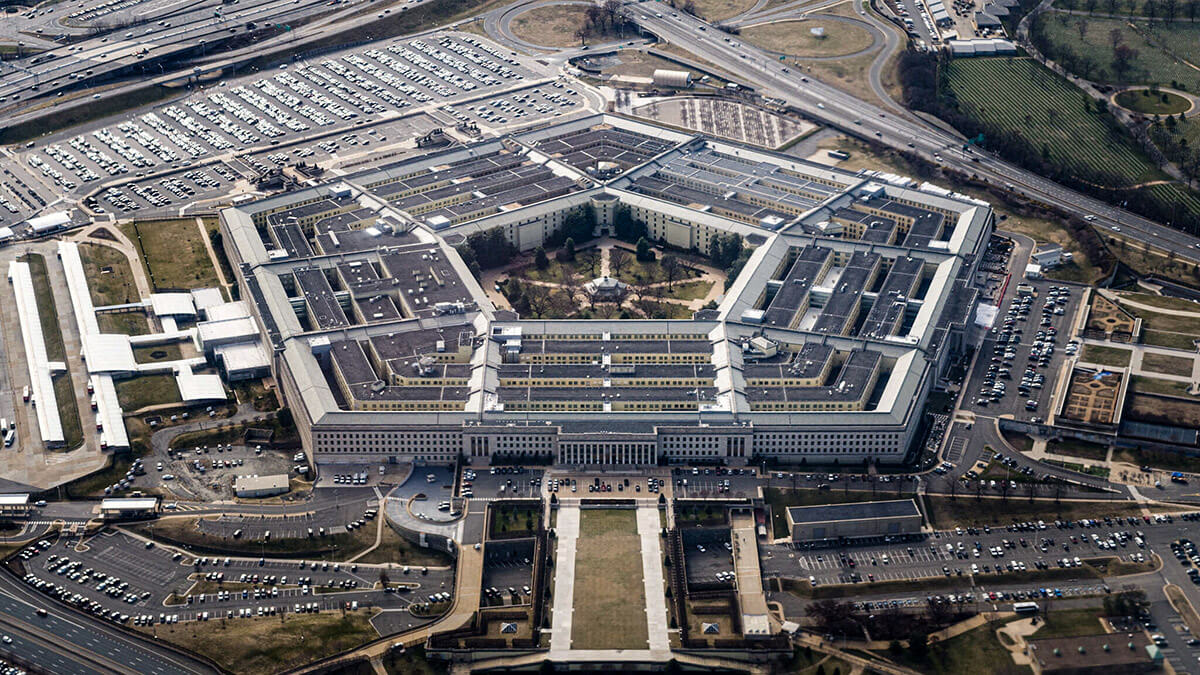
Pentagon spokesman Sean Parnell announced last Friday the withdrawal of approximately 5,000 US troops stationed in Germany, a decision made by Defense Secretary Pete Hegseth after a “thorough review” of the forces in theater European. The next day, President Trump himself declared from Florida that the reduction would go “well beyond” that figure. This measure – which will leave a little more than thirty thousand American soldiers on German soil – comes after several weeks of tensions with Chancellor Friedrich Merz, who declared that the United States felt “humiliated” by the prolongation of the Iranian conflict. Internal Pentagon documents leaked to Time and the Financial Times reveal that the US administration is even studying the possibility of suspending Spain from NATO – an unprecedented step – in retaliation for Pedro Sánchez’s refusal to authorize use of the bases of Rota and Morón for Operation Epic Fury. Republican senators such as Roger Wicker (Mississippi) and Congressman Mike Rogers (Alabama), respectively chairmen of the Armed Services Committees in both chambers, expressed “deep concern” over the decision.
ImplicationsÂ
The announced withdrawal constitutes above all a political message: Washington believes that Europe must finally assume the main responsibility for its own conventional defense, while the United States reorients itself towards the Indo-Pacific. The Colby philosophy – referring to Undersecretary Elbridge Colby, the main architect of this policy – is found here in its pure form. Beyond the symbolism, what is truly worrying are the underlying factors already analyzed by the Council on Foreign Relations: the depletion of stocks of precision munitions – in particular Patriot interceptors and HIMARS – consumed massively during Operation Epic Fury, which will delay the deliveries to Ukraine, United Kingdom, Poland and Lithuania. This is a critical point: Allied conventional deterrence relies on industrial margins that the war against Iran has exposed, and it is precisely these margins that Rheinmetall’s record figures are beginning to fill, albeit with a structural delay. Spain, for its part, lives in a blatant contradiction: while the government closes airspace to the United States and prohibits the operational use of the bases — invoking Article 63 of the Constitution and the bilateral agreements of 1953 —, the operational reality of Rota and Morón remains central for the allies. This inconsistency between public discourse and military reality is, it should be clearly stated, the defining characteristic of the position of the current Spanish government: a neutrality which borders on irresponsibility and which places Madrid, paradoxically, in a more hostile position towards Washington than towards Tehran.
Perspectives and scenarios
The Europe that looks in the mirror today is the one to which I dedicate, in these pages and in my analyzes for La Razón and El Debate, relentless criticism: a Europe which invests late, which invests poorly and which invests in a fragmented manner. The German promise to reach 3.5% of GDP in defense by 2029 is welcome – and, as Rheinmetall confirms today, it is coming true with verifiable data – just as is the overall European spending plan which must double to reach 750 billion dollars per year by 2030; but the industrial reality highlights the flaws of the project: twelve different models of main battle tank in Europe compared to only one in the United States, eighty percent of European purchases historically intended outside the continent, and an almost chronic inability to set up processes joint acquisitions. As convinced Atlanticists, we can only regret that the Old Continent has delegated its security to its American ally for so many decades without developing the strategic autonomy essential to being a credible partner. The NATO summit in June will be decisive. Spain, for its part, will have to decide whether it wants to be part of the problem or the solution; There are no half measures right now.
Ceasefire between Israel and Lebanon collapses in south with most intense escalation since signing
FaitsÂ
Violations of the ceasefire concluded on April 16 between Israel and Lebanon – extended on April 23 for three more weeks following the announcement by President Trump himself – have intensified alarmingly this week. The United Nations Force in Lebanon (UNIFIL) described last week’s attacks as “the most intense since the start of the truce.” Israeli bombings on Majdelzoun, in the south of the country, have left several dead and caused massive displacements, while Hezbollah – despite the Lebanese government’s formal ban on March 2 – continues to refuse to lay down its arms and accept direct mediation with Israel. The Lebanese government, led by a weakened administration, demands Israeli withdrawal from the south of the territory; Tel Aviv subordinates the consolidation of the truce to the effective neutralization of the weapons of the Shiite terrorist organization. More than 2,000 people are believed to have died in Lebanon and more than a million were displaced by mid-April.
ImplicationsÂ
The fragility of the Lebanese ceasefire was predictable and, in some ways, predicted in these reports from day one. Hezbollah is neither a militia nor a political movement with an armed wing: it is – and it should be repeated as many times as necessary – a terrorist organization, an organic instrument of the Iranian oligarchic-jihadist regime, financed, armed and directed by Force IRGC Quds. No agreement will be viable as long as Hezbollah retains its residual arsenal south of the Litani; no Lebanese sovereignty will be real as long as this “state within a state” maintains its parallel command structure. It is, moreover, a deeply personal matter for the one who writes these lines: the Lebanon of my family memories, the Lebanon that my father knew during his mediation during the TWA Flight 847 crisis and during his negotiations for the release of Chancellor Assad Abdo and GEO agent Pedro Antonio Sánchez Anula, does not deserve to remain the perpetual hostage of a terrorist organization which proclaims itself the defender of the country but which is, in reality, its main source of misfortune.
Perspectives and scenarios
The stability of the ceasefire depends, paradoxically, less on Beirut or Tel Aviv than on the outcome of the negotiations between Washington and Tehran, carried out under the mediation of Pakistan. If the Iranian dictatorial and mafia oligarchy signs the fourteen-point memorandum – including, as demanded by the United States, effective restrictions on its support for regional terrorist organizations – Hezbollah will find itself deprived of the logistical backbone that has supported it since 1982. If, on the contrary, the mediation fails, the terrorist organization will seek to relaunch the confrontation with Israel to maintain its importance internally, and southern Lebanon will become, once again, the scene of a tragedy. The Trump administration, which has already designated Hezbollah a terrorist organization in all respects, sees this issue as one of its decisive tests; It is worth remembering that the paradox of beheading does not only apply to Tehran, but to its entire proxy architecture: cutting off the head is not enough if the body remains armed.
Several people inspect a building damaged by an Israeli attack on Sunday, amid escalating hostilities between Israel and Hezbollah, as the conflict between the United States, Israel and Iran continues, in Bir Hassan, Beirut, Lebanon, April 6, 2026 – REUTERS/ MOHAMED AZAKIR
” src=”https://www.atalayar.com/media/atalayar/images/2026/04/06/2026040615121281097.webp”>
Trump and Lula da Silva hold cordial meeting at White House, pave way for renegotiation of tariffs after months of frosty diplomacy
FaitsÂ
Brazilian President Luiz Inácio Lula da Silva held a three-hour meeting with Donald Trump at the White House on Thursday, including bilateral talks and a working lunch. The meeting – initially planned with a joint press conference which was ultimately canceled without public explanation – concluded with cordial declarations from the two protagonists. Trump wrote on Truth Social that the meeting “went very well” and described Lula as “a very dynamic president”; Lula, from the Brazilian embassy, declared that he had emerged “very, very satisfied” from the discussions. The agenda focused on bilateral trade, customs duties, cooperation in the fight against organized crime and access to critical minerals. It is worth recalling the context: last year, Trump imposed customs duties of 50% – among the highest on imported products – on Brazilian exports, explicitly linking this measure to the legal proceedings against former President Jair Bolsonaro, his political ally, was subsequently sentenced to 27 years in prison for attempting to overthrow the constitutional order. Trump then lifted most of these tariffs – notably on Brazilian beef and coffee – in order to contain inflation of consumer goods in the United States.
ImplicationsÂ
This meeting brings together two populist figures with opposing ideologies who have built their respective political careers by opposing, each in their own way, the established elites. The fact that the dialogue took place in a friendly climate despite deep differences on economic policy, international alliances – Lula is one of the most active leaders of the BRICS + bloc, hostile to the hegemony of the dollar – and human rights, demonstrates that Trumpist realism, when it operates under the wise advice of Marco Rubio, prefers pragmatic agreements to ideological crusades. However, we cannot forget that the Brazilian Workers’ Party and Lula himself have maintained close ties with the Chavista narco-dictatorial regime, with Havana and with Tehran, and that Brasilia’s relations with the US administration cannot be fully normalized as long as Brazil persists in this alignment. The discussion on critical minerals – the trade war on rare earths is, let us remember, one of the most important strategic fronts against Chinese expansionism – is particularly interesting; However, Brazilian sources close to the president admitted to Reuters that a formal agreement on this topic was “not expected” in the short term, as it was not even possible to reach consensus on a basic memorandum of understanding.
Perspectives and scenarios
Brazil is preparing for presidential elections in October this year, in which Lula – aged 80 – will seek a fourth non-consecutive term against Senator Flávio Bolsonaro, son of the former president and, according to polls, practically tied with the current head of state. Lula’s diplomacy with Washington will be conditioned by this timetable: he must demonstrate the capacity for international dialogue without reopening wounds with Bolsonaro and his electoral base. The Trump administration, for its part, is also playing on the double front of electoral calculation – mid-term elections in November – and the hemispheric strategy which combines firmness in the face of the narco-Chavista state with a cosmic corruption of the sinister brothers Rodríguez with the pragmatic search for balance with Brasilia, Mexico and other regional actors. We unreservedly support the attacks on trafficking vessels in the Caribbean and the continued pressure exerted on the dictatorial regimes in the hemisphere; we defend international free trade – in line with the thinking of the incomparable President Reagan, the best American president of the second half of the 20th century and perhaps even of the entire 20th century – and, by Therefore, we regret the tariff restrictions of the first Trump period. If this second phase makes it possible to adjust customs tariffs through bilateral negotiations, so much the better. Diplomacy, when exercised with realism and prudence, remains the best instrument of foreign policy.
The President of the United States, Donald Trump, and the President of Brazil, Luiz Inácio Lula da Silva in this file photograph from October 26, 2025 – PHOTO/ Ricardo Stuckert/Presidency of Brazil/Image provided through REUTERS
” src=”https://www.atalayar.com/media/atalayar/images/2026/05/08/2026050815062172866.webp”>
Media rack
Summary of editorial lines and dominant approaches in the international press analyzed over the last twenty-four hours, organized by geographical areas and analytical affinity.
Références anglo-saxonnesÂ
The New York Times and the Washington Post covered the meeting between Rubio and Leo XIV in detail, underlined the historical particularity of the first American pontiff and described this tension as one of the most striking diplomatic anomalies since the Cold War; the Post discusses “the pope’s emergence as a global critic of the war against Iran.” The Wall Street Journal and the Financial Times favor the economic angle of the Rubio-Lula agreement and the Rheinmetall data; The FT adds detailed information on delays in US deliveries to the UK, Poland and Lithuania. Reuters publishes the Breakingviews according to which “arms manufacturers see that German spending is real” and maintains central coverage of the exchange of fire in the Strait of Hormuz. The Economist signs global exclusivity on the GRU’s tripartite plan to supply fiber-optic drones to Iran and maintains its cautious analysis on the collapse of the VE Day truces. The Times and The Telegraph underline British solidarity with the allied operation in the Gulf. The Guardian emphasizes civilian victims and legal doubts linked to the blockade. The BBC provides comprehensive and balanced coverage of the seven main fronts.
Chaînes et médias numériques américainsÂ
CNN, CBS and CNBC – the latter focused on the economy – widely covered the Trump-Lula meeting, the Rheinmetall assessment and the new exchanges of fire in Hormuz. Fox News presents the US attacks on Qeshm as a demonstration of effective pressure from Trump and highlights the president’s warning of “much suffering” if the deal is not signed. Politico and Axios leak details of the fourteen-point memorandum and report on the administration’s internal dilemmas. The Hill and USA Today focus on the electoral impact of the confrontation between Trump and Leo XIV and on the Republican division over Germany’s withdrawal. Newsweek, Time and The Daily Beast highlight tensions with the Holy See as one of the political costs of the presidential style. Bloomberg focuses on the Russian energy windfall and the implications of Rheinmetall for European markets. The National Interest and The Washington Times favor a realistic and pragmatic reading.
Presse européenne continentaleÂ
Le Monde, Le Figaro, La Croix, Le Point, Le Nouvel Observateur and L’Express agree to highlight the Rubio-Léon XIV meeting; La Croix, in its Catholic line, offers the most detailed and thoughtful coverage. Liberation, in its progressive line, questions the legitimacy of Operation Epic Fury. LCI, BFM TV and France Info widely cover the Russian withdrawal from the Red Square parade and the confirmation of German rearmament. The Frankfurter Allgemeine Zeitung, Die Welt and Die Zeit soberly welcome Rheinmetall’s figures and reflect the German institutional unease in the face of the withdrawal of troops. Corriere della Sera reports Prime Minister Meloni’s defense of the pontiff and the resulting tensions between Trump and Meloni. L’Osservatore Romano publishes the Vatican’s institutional coverage of the meeting between Rubio and Leo XIV. La Tribune de Genève underlines Switzerland’s role as a potential mediator. Helsingin Sanomat emphasizes the consequences for NATO’s northern flank. Gazeta Wyborcza expresses Polish concern over delays in deliveries of Patriots and the transfer of fiber optic drones from the GRU to Tehran.
Arab world and Israel
Asharq Al-Awsat, Arab News, Al-Riyadh and Saudi Gazette are taking a cautious stance on the negotiations, with growing expectations of a possible agreement. Gulf News (UAE), Khaleej Times, Al-Ittihad and Gulf Today strongly denounce the Iranian attacks against the United Arab Emirates. Peninsula Qatar and Gulf News Qatar highlight Qatar’s role as mediator. The Times of Oman claims Muscat’s earlier role. Yedioth Ahronoth, Israel Hayom and the Jerusalem Post express unease at the prospect of a deal that could leave part of Iran’s nuclear program intact. Maariv and Haaretz qualify their positions from opposing camps. Al-Jazeera and Al-Arabiya maintain their respective lines. Al-Hayat, Al-Quds Al-Arabi, Al-Hayat Al-Jadida, Al-Ayyam and Felestin address the Palestinian issue. An-Nahar, L’Orient-Le Jour and the Daily Star report with concern the deterioration of the ceasefire in southern Lebanon. The Jordan Times and Al-Rai highlight the Jordanian position. Hürriyet emphasizes Turkish unease in the face of Ankara’s marginalization in mediation.
Russian, Ukrainian and Polish press
Russia Today, TASS and Vesti systematically ignore the exclusivity of The Economist on the GRU plan and present the reduced parade as a magnanimous gesture. Ukrainian Pravda, UKRINFORM, Fakty i Kommentarii, Kyiv Post and The Kyiv Independent amplify the revelation of the Russian technology transfer plan to Tehran as proof of the Sino-Russian-Iranian axis and dismantle the Moscow discourse on the ceasefire.
Asia and Indian subcontinent
The South China Morning Post and the China Daily focus on the analysis of the Trump-Xi summit of May 14 and 15 and the visit of Iranian Foreign Minister Araghchi to Beijing. WION, Times of India, Hindustan Times and Indian Express cover the first anniversary of Operation Sindoor. The Daily Jang and the Pakistan Times highlight the figure of Marshal Asim Munir and Pakistan’s role as mediator. The Yomiuri Shimbun, Tokyo Times and Straits Times are tracking the implications for the Indo-Pacific region.Â
Amérique latine et think tanksÂ
ClarÃn (Buenos Aires), El Mercurio (Chile) and Reforma (Mexico) extensively cover the Trump-Lula meeting with an emphasis on its regional impact; Reforma adds bilateral tensions linked to the American extradition request for ten Mexican politicians linked to the Sinaloa Cartel. The Mail and The Globe cover the Canadian reaction to the withdrawal of troops from Europe. Publications of Foreign Affairs, bulletins of the Royal United Services Institute (RUSI), analyzes of the International Institute for Strategic Studies (IISS), the Center for Strategic and International Studies (CSIS), the French Institute of International Relations (IFRI) and the Economist Intelligence Unit converge on a cautious assessment of the viability of the negotiating process with Iran and warn against exhaustion Western military stocks as a structural variable.
Editorial
There are days when international politics resembles that classic character from the Russian novel who makes serious decisions between two glasses of cognac, without realizing that on each of them lives, fortunes and, above all, the credibility of nations depend. The day we analyze today undoubtedly belongs to this category. Let the president of the world’s leading power declare that a ceasefire is still in effect while simultaneously bombing enemy ports; that an agreement likely to reshape the balance in the Middle East depends only on a fourteen-point document drawn up in Islamabad; that the Kremlin refrains for the first time in almost two decades from displaying its military pride on Red Square for fear of drones made from commercial parts, while simultaneously providing fiber optic drones to the Iranian oligarchic-jihadist regime to kill American soldiers; that the Secretary of State meets the Pope to “appease the presidential rhetoric”; that a German industrialist confirms with figures what the European political class could not believe; and that, in the midst of it all, two populists of opposing ideologies share three hours of cordial conversation at the White House, it paints a relentless portrait of the times in which we live.
I describe, in these pages and in my columns for La Razón and El Debate, the nature of wars of variable intensity and the contained systemic divide as characteristic features of our time. Donald Trump’s foreign policy – pragmatic, realistic, capable of diplomatic successes like those of Cambodia-Thailand, Gaza or Armenia-Azerbaijan when it operates with the prudence that Marco Rubio brings – combines undeniable successes with erratic conduct which tested the cohesion of the allied camp. It would be unfair not to recognize the first: the pressure on the Iranian regime produced, thanks to Operation Epic Fury, a structural weakening that no diplomat had succeeded in obtaining in forty years; The dismantling of the nuclear program, if the fourteen-point memorandum is finally signed, will constitute a historic success. The meeting with Lula, too, demonstrates that bilateral diplomacy can work miracles when exercised realistically. But it would be just as unfair to ignore the latter: the total lack of post-conflict planning in Tehran, the impromptu announcement of the withdrawal of five thousand soldiers from Germany, the threats of suspension of Spain from NATO, the personal attacks against Pope Leo XIV, and the 50% customs duties imposed on Brazil there barely a year constitute strategic costs that erode, day after day, the credibility of American leadership.
The Economist’s revelation of the Russian GRU plan deserves further reflection, given its importance. Fiber optic drones constitute a disruptive technological innovation due to their immunity to electronic countermeasures; their transfer to a state terrorist regime is an act of extraordinary strategic gravity. Some commentators, even within the Trumpist camp, maintain that Russia could play a role as mediator between Washington and Tehran; the GRU tripartite plan dismantles this illusion. Moscow is not a mediator: it is a supplier of offensive weapons intended to kill American soldiers. And the energy windfall resulting from the blockade of the Strait of Hormuz – an additional forty billion per year for the Russian Treasury, according to the most recent estimates – fuels, paradoxically, the war machine which is killing Ukrainians. Defending the Ukrainian cause and rejecting Russian territorial aggression requires today, moreover, to unequivocally denounce this bellicose collaboration between Moscow and Tehran.
Allow me to stop for a moment on Spain, my country. The position of the current government – closing airspace, banning the operational use of Rota and Morón, and a public discourse that places Madrid in a more hostile position towards Washington than towards Tehran – represents a neutrality that borders on irresponsibility. The constitutional invocation of article 63 and the bilateral agreements of 1953 is, without doubt, legally defensible; what is intellectually untenable is the gap between the speech and the operational reality of the bases, which remain active for our allies. Rheinmetall’s figures constitute a further warning signal: while Germany confirms with verifiable data that it is preparing to defend itself, Spain continues to lack a coherent industrial defense plan, a clear precision munitions supply strategy and a common vision of the country’s role in Allied architecture. The request of the person writing these lines is neither maximalist nor hawkish: it is, simply, a request for coherence. Claiming to be a member of NATO, benefiting from the Atlantic security umbrella since 1982, and, at the same time, setting oneself up as a moral censor of its main ally while it is waging a war against a terrorist state – Iran – which for forty years financed the most bloodthirsty terrorist organizations on the planet – Hezbollah, Hamas, the Houthis of Yemen, the Iraqi Shiite militias – is a contradiction that history will not forgive. Atlanticists at heart and convinced Europeanists that we are, we demand from Madrid coherence, not maximalism; loyalty, not servility; but above all, clarity.
I end with a reflection on the meeting between Marco Rubio and Pope Leo XIV, which deserves a calm analysis. The Church, through the voice of its American pontiff, fulfills the moral duty incumbent upon it: to denounce the suffering of the innocent, to call for peace, to recall the primacy of human dignity over the calculations of power. The White House, through the voice of its practicing Catholic Secretary of State, is trying to preserve the institutional channel that no realist can afford to close. The clash between Donald Trump and Leo Catholics by parentage and by conviction, Atlanticists by strategic analysis, defenders of institutional diplomacy without fuss, we pray that prudence prevails. And to conclude, once again, the essential: we are against dictatorships of all tendencies, with particular vehemence against the Iranian oligarchic-jihadist regime, against the cosmically corrupt narco-Chavist state of the sinister RodrÃguez brothers, against Cuba, against Nicaragua, against Chinese expansionism. We uncompromisingly defend representative liberal democracy, the market economy, fundamental rights and freedoms, the values of the Spanish transition and the figure of King Juan Carlos I as the architect of our democracy. We are tirelessly fighting jihadist terrorism in the four corners of the planet. Tomorrow, there will be new chessboards, new pawns, new risks. The only thing left is the duty of analysis.