After the adoption by the Political Bureau of Resolution 80 of January 7, 2026 on the development of Vietnamese culture, Hanoi is striving to concretize its orientations in order to make culture a real pillar of sustainable development.
>> Traditional arts adapt to the modern world
>> Cultural development, a driver of sustainable growth in Hô Chi Minh City
>> Digital transformation and strategic autonomy of cultural industries in Vietnam
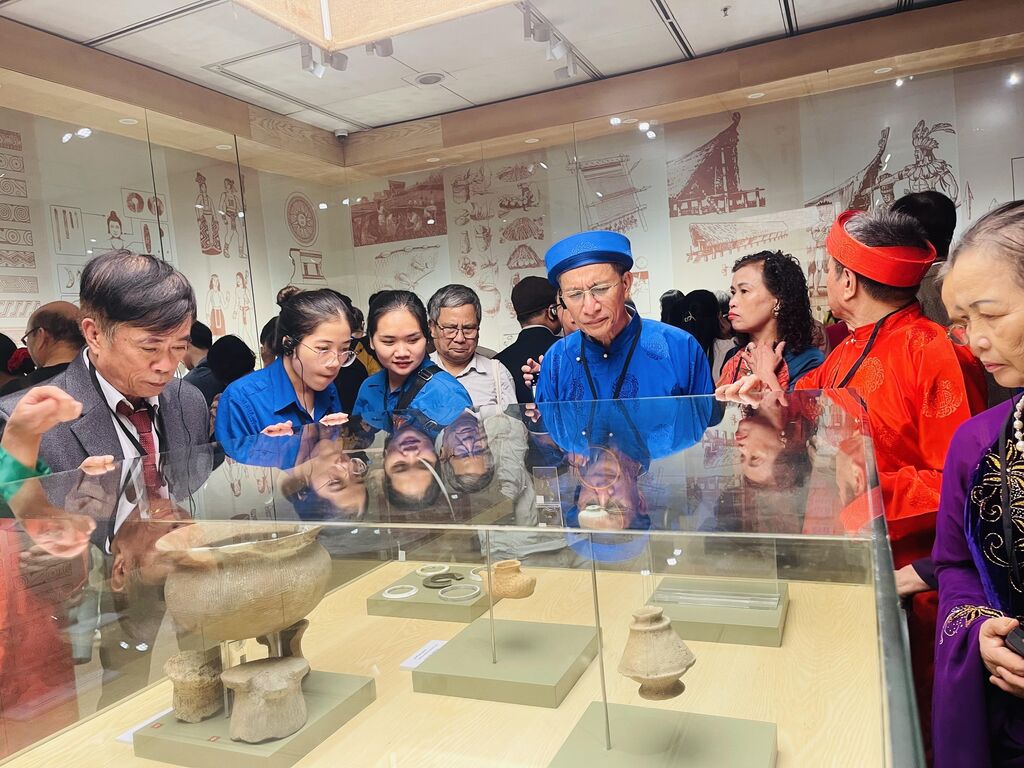 |
| Delegates and citizens visit an exhibition space at the Hanoi Museum. |
| Photo: Tuyêt Mai/VNA/CVN |
The capital has an immense cultural heritage with 6,489 historical sites, 1,793 elements of intangible heritage, six heritage sites listed by UNESCO, 351 national treasures and more than 1,350 craft villages. It also benefits from an important network of universities, cultural institutes and local cultural infrastructures.
Despite these advantages, the economic development of heritage remains limited. Tourism products linked to culture still lack a strong identity and attractiveness. Several major sites, such as the Perfume Pagoda or the Thây Pagoda, remain mainly exploited during festival seasons. The heritage spaces of the city center, such as the Old Quarter or West Lake, still lack immersive activities and integrated tourist products.
According to several experts, these limits are explained by the absence of a strategy for distinctive cultural products, a weak articulation between conservation and exploitation, as well as a still insufficient use of digital technologies and social resources.
Putting the resolution into practice
By 2030, Hanoi has set several objectives: 95% of local cultural facilities operational, generalized access of students to artistic and heritage education, complete digitization of national sites and contribution of cultural industries representing 9% of the GRDP.
The city is focusing in particular on digital transformation as a priority axis: development of shared cultural databases, digital exhibitions, virtual tours and intelligent guiding applications in sites such as the Temple of Literature, Hoa Lo Prison or the Imperial Citadel of Thang Long. 3D, VR/AR and GIS technologies will also be applied to the tourist exploitation of heritage.
At the same time, Hanoi is developing a cultural and creative ecosystem where businesses play a driving role and where residents are placed at the center. Traditional arts like chèo (popular theater), the cải lÆ°Æ¡ngÂ(renovated theater) where the water puppets are restored and associated with cultural tourism…
Advantages but also blockages
A member of the UNESCO Creative Cities Network, Hanoi welcomed nearly 30 million visitors in 2025 and more than 12 million during the first four months of 2026.
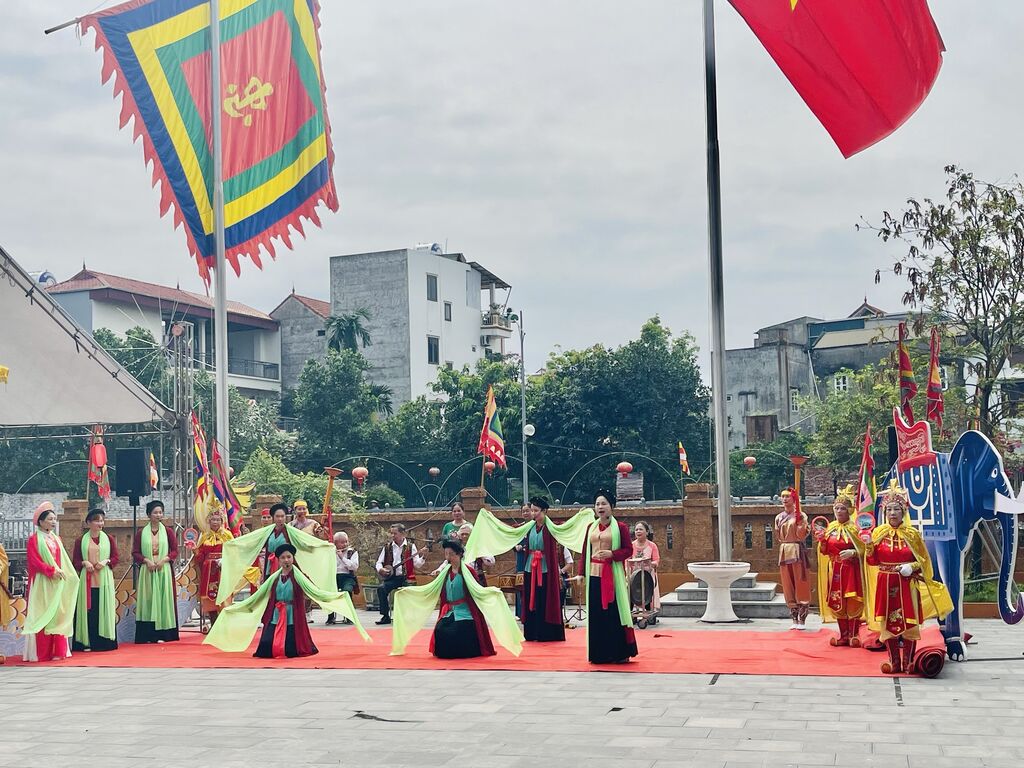 |
| Hanoi is developing a cultural and creative ecosystem where businesses play a leading role and residents are at the center. |
| Photo: Tuyêt Mai/VNA/CVN |
The nighttime economy, gastronomy and creative spaces are gradually becoming markers of urban identity.
However, several obstacles persist: lack of connection with realities on the ground; delay in the application of technologies, innovation and digital transition; lack of common databases and criteria for evaluating digital culture.
Furthermore, cultural activities are still struggling to create original products with high added value, while certain cultural deviations, particularly on social networks, persist. Infrastructure and cultural spaces remain unevenly distributed and the capital lacks large-scale emblematic works.
The use of resources and support for artistic development remains limited. Finally, efforts to promote the image of an elegant and civilized Hanoi have not yet produced the expected results.
Boosting tourism through culture
Models combining tourism, culture and crafts have already been tested in Bat Trà ng, Son Tây, Soc Son or Ba Vi, gradually directing tourism towards immersive experiences. However, their scope still remains limited.
Tourism professionals are calling for modernizing the organization and promotion of destinations, renovating cultural products, restoring historic sites and strengthening digital communication.
Through the implementation of Resolution 80, Hanoi intends to gradually transform its cultural heritage into a real engine of economic, tourist and creative development for the capital.
VNA/CVN


/2026/05/08/69fdc3b18d8c9839728845.jpg "American writer and journalist Philip Caputo, great witness to the Vietnam War, died at 84")