The public becomes a “subject of surveillance” in the digital cultural environment.
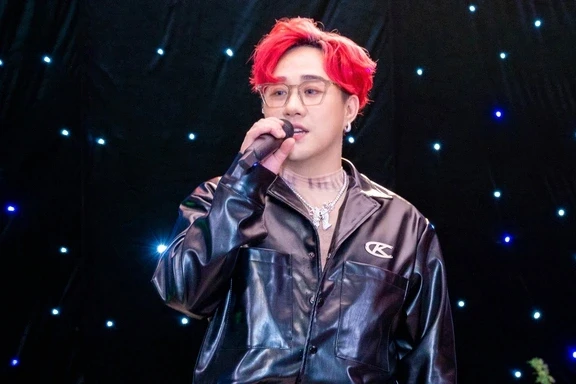
+ Journalist: Based on recent cases like Trung Quan Idol or Bray, do you think these are individual faults or reflect issues within the current artistic community?
– Associate Professor Dr. Bui Hoai Son: I believe each incident should be analyzed based on the actions, level, and specific responsibilities of each individual. We should not generalize the entire artistic community based on a few cases. Many Vietnamese artists are dedicated professionals who are responsible towards their profession and the public. However, from a broader perspective, recent incidents cannot be considered as mere isolated “individual accidents.” They reveal certain issues within the current artistic environment, especially when artists are creators, public figures, and mediatic actors in the digital space.
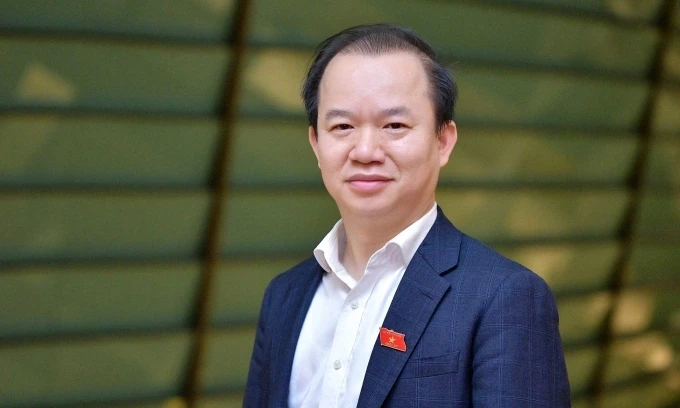
In the era of social media, the line between privacy, personal opinions, artistic works, and an artist’s public image is becoming increasingly blurred. Actions offstage, online statements, or lyrics from a musical work can become social issues if they touch on ethical, cultural, legal, or public opinion norms.
Therefore, the fundamental issue is not to condemn an individual for fleeting emotions, but rather, in light of these cases, to reassess the cultural and entertainment ecosystem: are professional standards clear enough? Is the ethical training of artists adequately considered? Are image management mechanisms of entertainment companies, producers, and brands professional enough? And do artists themselves fully understand that celebrity always entails social responsibility?
Public scrutiny: positive, but should not become an “emotional tribunal.”
Journalist: Recently, the public’s reactions to incidents involving artists have been swift and widespread. Do you think this trend reflects a shift in attitudes or is influenced by the dissemination mechanisms of platforms like TikTok and Facebook?
– Associate Professor Dr. Bui Hoai Son: I believe this results from two factors: an evolution of attitudes and the powerful dissemination mechanism of digital platforms. Informed audiences are more proactive, more sensitive to normative issues, and have more tools to express their opinions. Previously, reactions were often slow and scattered, mainly through traditional media or tacit choices: to watch or not, to support or not. Now, on platforms like Facebook, TikTok, YouTube, Threads, etc., reactions spread rapidly, creating strong social pressure.
From a positive standpoint, this shows that the public is no longer passive but actively participates in evaluation, criticism, and even in defining new acceptance criteria for artists. It is a sign of cultural maturity and greater consideration of artists’ social responsibility.
However, it is important to consider the drawbacks of this platform mechanism. Algorithms often prioritize controversial content, strong emotions, extremist statements, and easily spread manipulated images. Therefore, an event can be amplified more quickly than necessary, its context simplified, or even turned into collective judgment. Civilized digital communication must be accompanied by social awareness. The public has the right to monitor, criticize, and express its opinion; but this right must be exercised based on accurate information, fairness, and respectful limits.
Creative freedom must go hand in hand with cultural responsibility.
+ Journalist: With the debates surrounding the lyrics of certain musical works like “Vietnamese People Love Each Other” by Chau Dang Khoa, where is the line between creative freedom and the obligation to comply with cultural norms?
– Associate Professor Dr. Bui Hoai Son: Creative freedom is essential for the survival of art. But freedom does not mean that creators can disregard all cultural norms, knowledge, or social responsibilities. Especially when it comes to songs celebrating the country and the nation, each word is not only a work of art but also touches on memories and shared feelings of the community.
“Talent attracts attention to artists, but it is culture that earns them lasting respect.”Professor Bui Hoai Son, member of the Culture and Social Commission of the National Assembly.
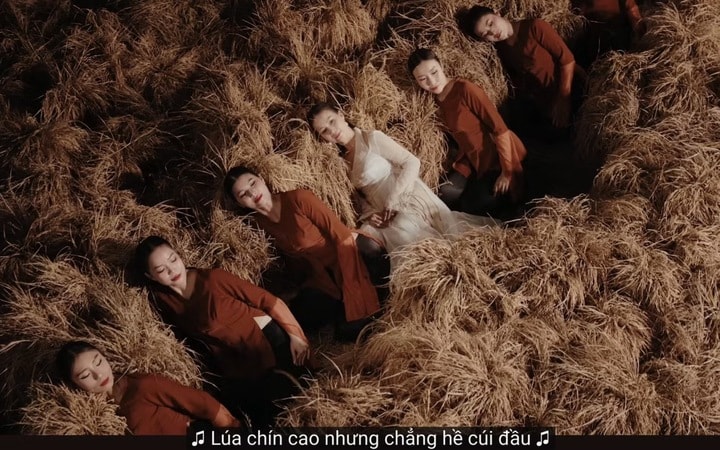
The debate around the lyrics of the song “Vietnamese People Love Each Other” raises a question that invites reflection. I will not dwell on judgment of a particular passage, but this story offers us a valuable lesson: creativity can enrich the meaning of a symbol, but it should not break away from the recognized cultural significance by the community, especially when the symbol is connected to morals, a worldview, and the rich heritage of proverbs, folk songs, and popular philosophy.
Here, the boundary is not a rigid line imposed by others, but rather a space for dialogue between the new and the true, between artistic inspiration and cultural knowledge, between creative individuality and community acceptance. Artists have the right to find new ways to express familiar things, but the more they show creativity with traditional materials, the deeper their understanding of tradition should be. Creative freedom must always be accompanied by responsibility.
The good news is that if artists know how to listen, explain, and adapt accordingly, controversy can also become a positive cultural process, contributing to the flourishing of both artists and the public.
+ Journalist: How do you distinguish between public scrutiny and actions that could lead to public pressure or cyberbullying against artists?
– Associate Professor Dr. Bui Hoai Son: In a modern society, public scrutiny is essential. When artists exhibit behaviors, make statements, or produce works that violate norms, the public has the right to express itself, criticize, demand explanations, or even boycott, within legal boundaries. This is a fundamental cultural right and a self-regulation mechanism of cultural life.
However, it is crucial to distinguish criticism from attacks; monitoring from persecution; and combating injustice from undermining human dignity. Constructive criticism focuses on behaviors, productions, statements, social impact, and the responsibility to rectify the situation. Cyber violence, on the other hand, encompasses personal insults, intrusion into privacy, and the spread of unverified information. One contributes to a healthier cultural environment; the other makes the digital environment more toxic.
Mistakes should be corrected as soon as they occur; responsible parties should assume their responsibilities; and criticism should be factual, targeted, and constructive. The public should not be deprived of its right to oversight, but it should not be encouraged to become an online “emotional tribunal” either. Artists should be accountable for their social impact, but they should also be protected from acts that harm their honor, their privacy, their mental well-being, and their legal security.
From the perspective of regulation bodies, the press, digital platforms, and professional organizations, it is essential to create a standardized space for critical analysis. The press should disseminate verified information and refrain from inciting hatred; digital platforms should implement mechanisms to limit violent and hateful content; professional associations should speak out quickly to promote ethical standards; and artists should explain themselves, offer apologies, and correct their mistakes, if necessary.
“When all stakeholders behave in a civilized manner, public scrutiny becomes a healthy force rather than a destructive pressure.”Professor Bui Hoai Son, member of the Culture and Social Commission of the National Assembly.
Journalist: In the current context, digital platforms and brands also play a role in disseminating artistic content. How should we consider the role and responsibilities of these entities when controversies arise?
– Associate Professor Dr. Bui Hoai Son: In the digital entertainment universe, artists are no longer the sole agents of influence. A piece of music, a video, a performance, or a statement can reach a wide audience through an ecosystem including digital platforms, record companies, producers, media, sponsor brands, and the fan community. Therefore, in the event of a controversy, it is impossible to place all responsibility on the artist, even though the artist remains primarily responsible for their actions and creations. Responsibility must be seen in the context of the cultural value chain.
Digital platforms have a crucial responsibility as they are not just neutral publishing sites. Recommendation algorithms, trend mechanisms, and moderation policies directly influence the content being disseminated. If they only prioritize engagement, shocking and deviant content easily takes precedence. Therefore, platforms must be more transparent, react promptly to inappropriate content, and promote community standards.
Brands cannot remain indifferent either. When they choose artists, they use their cultural prestige to create commercial value; therefore, they must be accountable for evaluating their image and responding appropriately to controversies, without blindly following fleeting public opinion or ignoring social norms.
It is time to talk more about the “cultural responsibility of the distribution chain.” Artists, distribution platforms, sponsor brands, media, and the public all play a part in this ecosystem. A healthy cultural environment cannot develop if each entity seeks only to maximize its own profit without considering its overall impact on society.
Journalist: According to you, what should we focus on to develop a healthy cultural environment: professional standards of artists, public acceptance levels, or current management mechanisms?
– Associate Professor Dr. Bui Hoai Son: I believe these three factors should not be presented as a binary choice of “this or that.”
“A healthy cultural environment can only be built when these three elements are united: artists with high professional standards, a public capable of civilized reception, and a management mechanism that is modern, flexible, and humane.”Professor Bui Hoai Son, member of the Culture and Social Commission of the National Assembly.
The starting point remains the professional demand on the artist. Artists create works, influence emotions and tastes; the more famous they become, the greater their social responsibility. Talent attracts attention, but it is culture that earns lasting respect. A professional artist must not only master their domain but also understand the public, law, history, cultural symbols, and know the limits of speech and behavior in public spaces.
The public also needs to develop its capacity for understanding, discernment, participation in reasoned debates, encouragement of exemplary practices, and critique of excesses, without falling into extremism. With good general culture and digital media skills, the public will play an essential role in cleansing the entertainment landscape.
Management mechanisms must also evolve to adapt to the digital environment. Current cultural management cannot be limited to penalizing infractions after the fact. It requires a system of professional standards, codes of conduct, early warning mechanisms, media education, responsibility of platforms and brands, and above all, coordination between the state, professional associations, cultural enterprises, and the community. Good management is not about intimidating art but creating a conducive framework for creativity to thrive in a structured environment based on solid values.
Ultimately, developing the cultural industry is not just about creating more products, more stars, and more revenue. It is mainly about creating a cultural life where talent is encouraged, creativity respected, the public protected, norms preserved, and personal development assured. The more the digital entertainment environment opens up, the more we need a solid cultural foundation; the faster dissemination, the greater social responsibility required; the more artists gain influence, the more they must be aware that they are not just playing for an audience but also shaping the values that society will choose for the future.
+ Journalist: Thank you very much, Professor Bui Hoai Son!
Source: congluan.vn