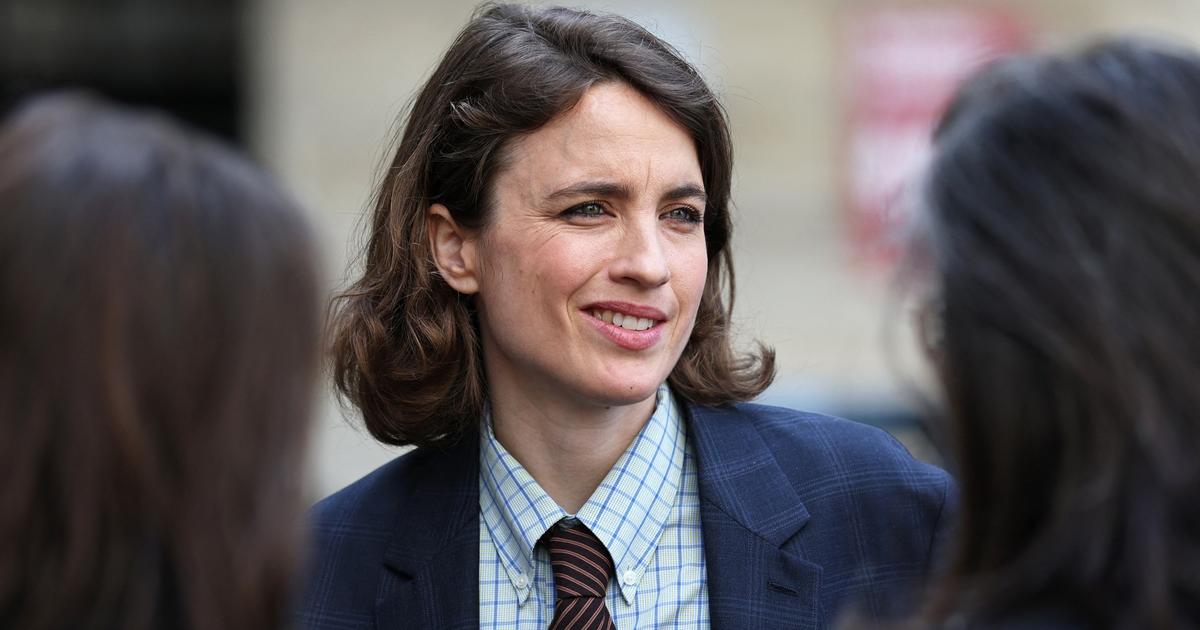
Hubert Védrine, former Minister of Foreign Affairs under Jacques Chirac, is the guest on the major interview show “Tout est politique” on Monday, April 27. He presents his book “After the West”, written with Maurice Godelier, and discusses the situation between Donald Trump and the Iranian regime.
Sonia Chironi: Have the United States underestimated the Iranians’ ability to resist? Hubert Védrine: It’s obvious, but the whole world knows it, we see it. They completely underestimated the capacities of resistance, of resilience, etc. They completely ignored the Strait of Hormuz issue, which was both obvious and nowhere to be found. There was a gigantic mistake.
That’s why countries around the world, even those who support Trump – despite his vulgarity and extravagant behavior – there are still people who think he is useful and does useful work on many levels, including managing migration flows in the United States – even Trump’s close associates don’t want to depend too much on him.
When studying the decision-making mode regarding Southern countries that want to put an end to Western domination that has lasted for centuries, they are quite happy because they think it’s bad for the West, all of this, in general. So, the countries for which it is the most distressing, the most complicated to deal with, are us, the Europeans, who asked for American protection after the war and got it with the 1949 Atlantic alliance treaty, and we are still in that situation… And all the Asian countries allied with the United States that depend on their protection. Is it still valid or not? That’s the big anxiety behind the analysis of Iranian events.
Nathalie Saint-Cricq: Today we heard the Iranians say that they would enrich uranium as they wish, that they would never return their stocks, the famous 440 kilos. What can be done to reach a minimum of agreement for things to calm down or de-escalate? Let’s imagine it, yes. We don’t know who decides in Iran now. It’s as if we had killed everyone here, except the sub-prefects. There are still people who decide. Among the decision-makers, some will say that we should never give up, because Trump won’t last long. We can see that in the United States, he is not supported, the level of support is decreasing, etc. The toughest in the Iranian regime who have survived, whom we do not know, may think they just have to wait, because Trump won’t last as long as them.
Sonia Chironi: Like the head of the Revolutionary Guards, who seems to be on this line of attrition warfare? We don’t know in what state they are, we don’t know who they are. In any case, there are probably some tougher people who will say that they shouldn’t give up, because Trump can’t wait very long. He will have to pretend he won, to explain the stop. There would be a crisis with Israel, well not Israel, Benjamin Netanyahu, who would like to continue.
But there are probably others who would say: “Listen, we’ve taken enough on the chin like this. It’s smarter to stop as soon as the regime survives, even if it’s in a crippled form, it’s a regime that survives. Then, we will manage, and if we manage to impose the idea of a tax on the Strait of Hormuz, which didn’t exist before, we will come out of it. “It may be much more interesting than the nuclear fantasy.
So there may be a wing, so to speak, that doesn’t want peace but finds a certain interest in stopping it next month, perhaps. And from Donald Trump’s side, it will depend on when the internal crisis becomes so strong, the rejection of his base, the crisis with JD Vance who has been against it from the start… He will say: “I am forced to stop, so I pretend I won.”
I am trying to answer your question, not entirely negatively, but in terms of timing, it doesn’t quite fit, because then we have the impression that what remains of the Iranian regime must believe that it can last longer than the other.
Sonia Chironi: That was my question, who has the most time? We’ll see. We can’t know, right?
Sonia Chironi: We can’t know. The blockade of Iranian ports decided by Donald Trump, is that an effective leverage in negotiations that can, indeed, economically suffocate the regions? If we come back to the immediate news, it is probably more effective than bombing. If he had done that from the beginning, we might be in a different situation. Well, we’ll see, but it’s like going back to the previous question. Can the regime last in the meantime? And they think that Trump won’t last very long.
We are still two months away from that, and there are midterms in November. Well, some days, Trump says, “All presidents lose the midterms, so it doesn’t bother me.” And at other times, they do everything not to lose them anyway. So there’s an incredible game with anticipation about the other’s ability not to last.
Moreover, I noted that when Minister Jean-Noël Barrot spoke, he talked about the regime. Maybe he has some information, or he plays on the idea that there must be an internal shift in the regime, where some will say: “Even if we survive as a regime, we should stop, we are not in the scenario imagined by the Israeli sold to the Americans about the total elimination of the regime.” If they don’t lose completely, they have gained a bit.
Find the full interview in the video above.