Several Ukrainian drone manufacturers are discreetly touring France to share expertise that has become essential in a war where these drones have transformed combat and outpaced European armies. This urgency has been heightened since March by the emergence of drones in another conflict: the one in the Middle East.
AFP met three Ukrainian manufacturers in April on the sidelines of a very confidential Franco-Ukrainian defense forum aimed at forging partnerships. The atmosphere was reminiscent of a spy movie: anonymity or using aliases required, meetings on a bench near the Champs-Elysées, or changing lounges in a hotel at the slightest hint of Russian language heard.
“We want to see how countries that have supported us, like France, can benefit from our experience,” explained Olexandre, an engineer from Bavovna who has been producing attack drones since 2022, including “the largest strike drone” in Ukraine, the Perun Max.
Ukraine is looking to showcase its drone expertise to secure more funding and political support, but struggles to open its exports without jeopardizing the protection of its technologies and the impact on the state. “When I speak with Europeans or Americans, they know very little about these drones,” Olexandre expressed surprise.
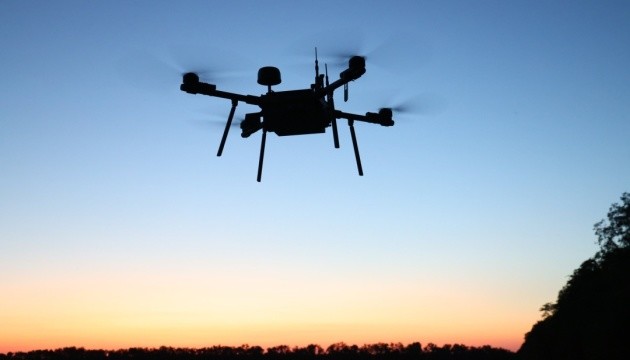
The Perun Max can “carry three projectiles, drop them on targets, return, reload, and depart again” for up to 30 sorties per night. The versatile drone can carry up to 32 kg over 25 km and deliver food, water, medications to soldiers in trenches, as well as distribute leaflets explaining to Ukrainians “how to surrender properly and stay alive” in areas where the Russians are advancing.
With around 400 employees, including 70 engineers based “somewhere in Ukraine,” Bavovna produces over 1,000 drones per month, costing between 7,000 and 20,000 euros.
The story of Skyfall, another Ukrainian start-up, began after the Russian invasion in 2022 with four engineers coming together in a garage to create an observation drone for what passes over Kiev. They quickly decided to add a “drop” capability.
Thus, Vampire was born, capable of bombing, laying mines from a distance, and transporting blood or generators. The drone reportedly participated in NATO exercises in May 2025 in Estonia, during which, according to information from the Wall Street Journal revealed in February, ten Ukrainian drone operators “neutralized” 17 tanks and two enemy battalions.
The “drone-filled sky” makes the battlefield transparent, where both soldiers and tanks become targets as soon as they venture into a “no man’s land” of about twenty kilometers. This unprecedented situation has been fueled by the technological race between Ukrainian and Russian combatants.
“A French unit engaged today on the Ukrainian front against the Russian army would be annihilated. We need to emulate the Ukrainian army if we want to stay competitive,” emphasized Colonel Michel Goya, a former marine officer and modern conflict analyst.
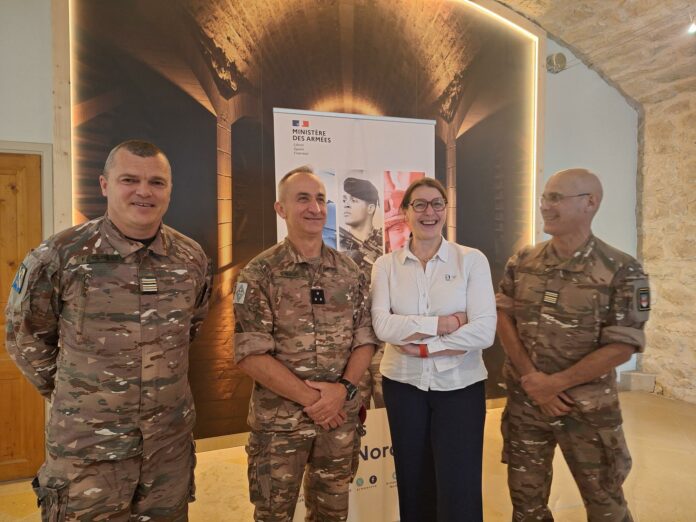
A transformation is underway in France for this reason. 5,000 of the 77,000 personnel in the operational ground forces are being redirected to drone-related specialties, according to General Bruno Baratz, commander of future combat. Faced with mass-produced products “destined to wear out our equipment,” there is a need for equally massive, low-cost, and easy-to-produce systems, highlighting France’s lag and the reluctance of some military hierarchies.
While “the priority remains the defense of Ukraine” and any international collaboration requires Kiev’s approval, a Skyfall spokesperson, who requested anonymity, hints that the group can meet both frontline needs and potential partnerships.
“It would be good for the whole world to see that Ukrainian solutions work not only in Ukraine. That is our added value,” he concluded.