“We are seeing a very strong demand, both nationally and internationally,” according to the CEO of the giant RTX.
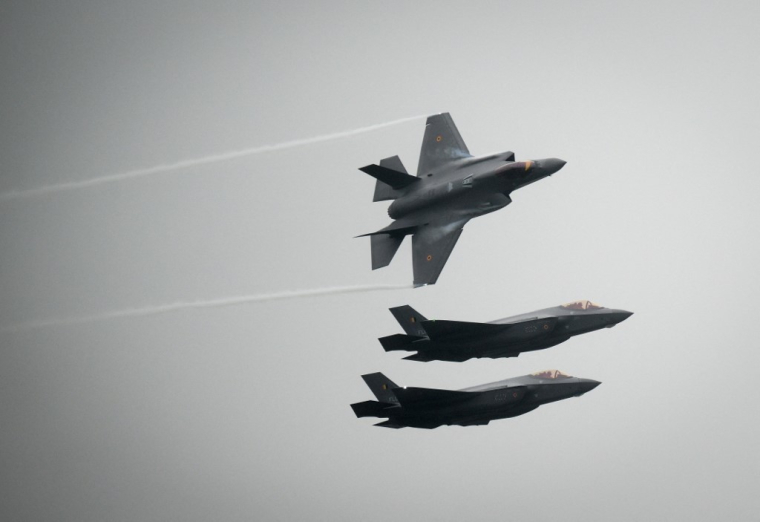
The American defense industry is benefiting from the Middle East war and reported a surge in orders and contract signings in the first quarter, amid strong international tensions. The sector had experienced strong growth in 2025, due to wars in Ukraine and Gaza, Russian incursions into European airspace, Chinese military maneuvers near Taiwan, and tensions in the Red Sea.
This increase in tensions is leading countries around the world to increase their reserves of armaments and military equipment. For those currently engaged in open conflicts, there is a need to replenish stocks in real-time and ensure maintenance and repair of deployed equipment.
In presenting their results for the first quarter of 2026, American groups RTX, Northrop Grumman, and GE Aerospace all reported a new surge in orders. After expressing hope for a “lasting solution” in the Middle East, RTX CEO Chris Calio indicated during a conference call with analysts that the company was working with the U.S. Department of Defense “to accelerate ammunition production.” In recent months, the Department has signed numerous agreements and contracts with mostly American firms to boost arms production, especially missiles like Tomahawk, Patriot, GEM-T, AMRAAM, etc.
With just Raytheon, a subsidiary of RTX, Chris Calio highlighted that five “major framework agreements” vital for national security had recently been signed, with the group already investing nearly $900 million to increase production capacity. He stated that “the current situation clearly illustrates the need for ammunition, integrated air defense technologies, and missiles, and more advanced capabilities to counter evolving threats.” “We are seeing a very strong demand, both nationally and internationally,” he emphasized. In response to this situation, the group has revised upwards several annual forecasts.
“Increased sense of urgency”
In defense, “we continue to rapidly execute highly prioritized military needs to support the United States and their allies,” he assured. However, the group, which also manufactures engines for Boeing and Airbus commercial aircraft, is also impacted by reduced commercial aviation in the Middle East, affecting maintenance activities.
From Northrop Grumman’s side, the priority is to deliver equipment and ammunition as quickly as possible, with orders increasing in quantity. Like its competitors, the group has expanded production capacity with about twenty new factories in the United States over the past two years, according to CEO Kathy Warden. “The conflict in Iran has clearly created an increased sense of urgency,” she emphasized.
In this context, all these contracts will provide “long-term visibility” to the sector, as highlighted by Chris Calio.
Government defense spending continues to rise worldwide.
“President (Donald) Trump has proposed a $1.5 trillion budget for national defense in 2027,” announced Jules Hurst, Deputy Secretary of Defense, during a briefing at the Pentagon. “This 42% increase will stimulate our defense industrial base by increasing the production of major weapon systems, reinforcing the supply chain, and supporting tens of thousands of small and medium-sized enterprises,” he added. He mentioned that “over $750 million, nearly the entire 2022 defense budget,” will be allocated to developing capabilities and purchasing weapon systems.
Boeing, a defense contractor, is set to release its results on Wednesday morning, and Lockheed Martin on Thursday.