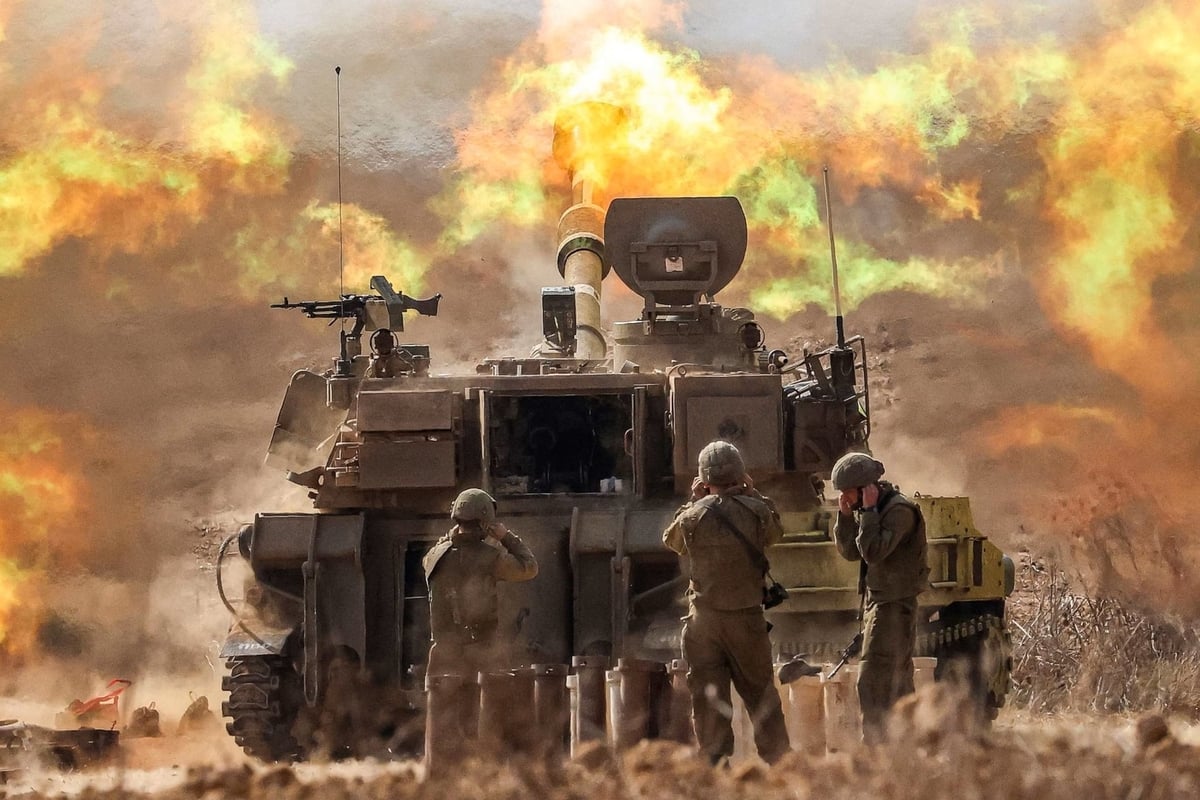
China would she raise the tone, after a month and a half of conflict? President Xi Jinping reacted to developments in the war in the Middle East on Tuesday, April 14, during a meeting with the Crown Prince of Abu Dhabi, Khaled bin Mohammed bin Zayed Al Nahyan. “Preserving the authority of international law should not mean using it when it suits us, and rejecting it when it does not,” criticized the leader, two days after the announcement of the naval blockade of the Strait of Hormuz by Donald Trump, while Iran claimed on Friday to have “completely opened” it for the remainder of the ceasefire.
[…]
A diplomacy that is willingly “ambiguous.” On the first day of the war, Chinese diplomacy quickly denounced the first Israeli-American strikes against Tehran, condemning “a violation of international law.” The death of the Iranian Supreme Leader, Ali Khamenei, “constitutes a serious violation of Iran’s sovereignty and security,” she added, calling for respect for the “fundamental standards governing international relations.”
By defending “the sovereignty, security, and territorial integrity of all Gulf countries,” Beijing demonstrates “timid support” for its Iranian partner, according to Marc Julienne, Director of the Asia Center at Ifri.
“Taking a firm stand on the side of Tehran potentially alienates other partners: the Gulf countries” affected by Iranian reprisals. China also does not want to worsen its relations with the United States, in a context of ‘warming up’ [relationships] between Xi Jinping and Donald Trump.
In the conflict between Washington and Tel Aviv in Tehran, China presented a five-point plan (New window) with the help of Pakistan to “restore peace and stability” in the Middle East. The initiative, presented at the end of March, called on the belligerents to “immediately cease hostilities,” initiate peace negotiations, and ensure, among other things, the security of civilian infrastructures.
After the failure of negotiations between Iran and the United States in Pakistan, Xi Jinping promised on Tuesday that his country would “continue to play a constructive role” in the resumption of talks.
“There is a lack of experience in China in crisis mediation,” says Marc Julienne. “For me, Pakistan is a leader in these negotiations.”
Economic interests in Iran and the Gulf. This image of a mediator is also explained by China’s significant and diverse interests in the Middle East, from Iran to the Gulf countries. “It has good relations with each party,” notes Marc Julienne.
“Talking, trading with everyone is China’s motto, it’s its advantage in the Middle East. It is important for Beijing to preserve this,” said Marc Julienne, Director of the Asia Center at the French Institute of International Relations to franceinfo.
“Iran represents 13-14% of China’s total oil imports. For the entire Gulf region, we are around 50%,” specifies Marc Julienne.
In this context, Donald Trump’s naval blockade of the strategic zone described by Donald Trump was not to the liking of its big rival. This time, the statements hardened, Guo Jiakun, spokesperson for the Ministry of Foreign Affairs, denounced during a press briefing “dangerous and irresponsible behavior.”
“China is experiencing this situation,” observes Marc Julienne, with consequences on the domestic front, since “the price of oil has increased.”
It was also among the countries participating in the conference organized on Friday by France and the United Kingdom to restore free movement in the area.
Donald Trump dreams of a Chinese cellotherapy. While China can see it coming, the United States seem determined not to let it act behind the scenes. Sources close to the intelligence services told CNN that Beijing intended to sell weapons to Iran to fight against American and Israeli troops.
In an interview on Fox Business television, Donald Trump affirmed on Wednesday that he had written to Xi Jinping to demand that he not go in that direction. In response, his counterpart assured him that “that is not what he was doing,” reported the billionaire. Two days later, Guo Jiakun rejected “baseless smears” and “malicious accusations.”
Marc Julienne remains “very cautious” about what would constitute a “very significant change” on the part of China.
>> An article to read in full on the France Info website.