Andy Corriher voted for Donald Trump. From his farm in the southeast of the United States, he observes helplessly as the war in the Middle East drives up his costs and threatens to reduce his harvest.
“We were hit at the worst possible time. We need fertilizers, the prices of which are skyrocketing and availability is decreasing,” the 47-year-old farmer told AFP, standing on the edge of a field of bright green wheat.
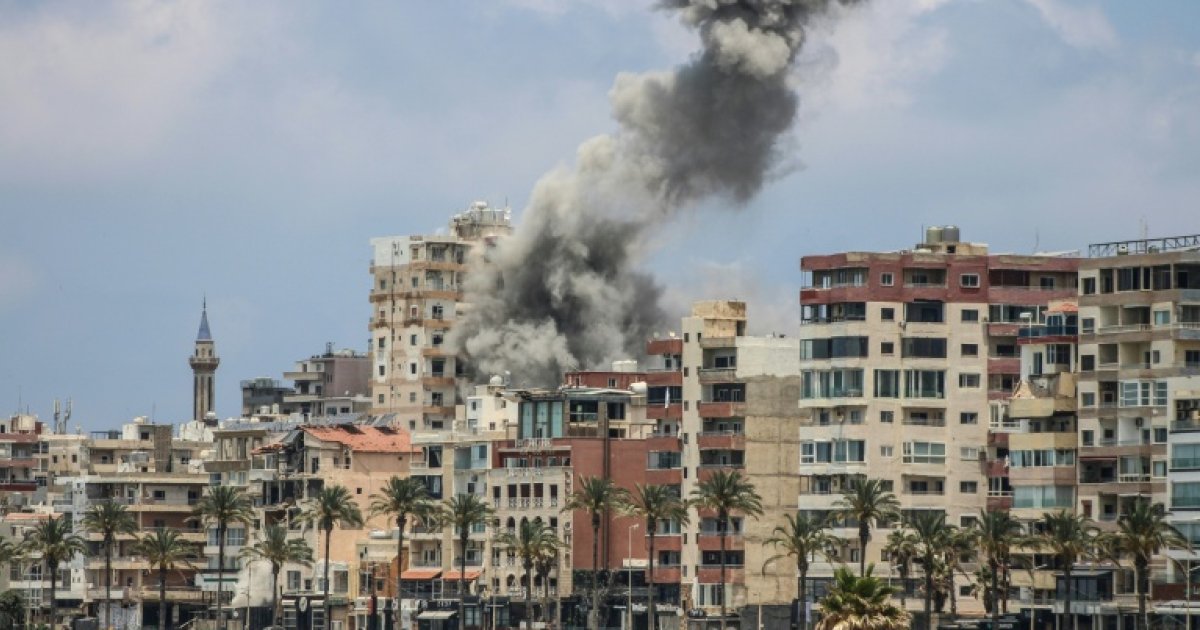
In response to Israeli-American airstrikes on its soil, Tehran has blocked the Strait of Hormuz, a major maritime route for the trade of hydrocarbons and fertilizers, causing prices to soar.
These are two major expenses for farmers, who are largely loyal to the Republican party in power in the United States.
In the 2024 presidential election, Donald Trump came out on top in 78% of the agricultural-dependent counties, according to the Investigate Midwest organization.
The Republican on Saturday attributed the price surge to the “fertilizer monopoly” and declared, “American farmers, we stand with you!”
Based in China Grove, North Carolina, Andy Corriher is still waiting for the liquid nitrogen fertilizer he ordered several weeks ago.
“The seller says they still don’t know when they can deliver it.”
According to him, the price has increased by at least 40% since the war began.
The farmer has decided to use one-third less, risking compromising the yield.
– “Devastating” –
About fifty kilometers away, Russell Hedrick had no choice but to buy most of his fertilizer after prices skyrocketed.
“Many American farmers don’t have enough space to stock up,” explained the man in his forties, while mixing products to feed his 400 hectares of soybeans and cereals.
He decided to use the “absolute minimum” of fertilizer and possibly add more later.
According to him, even before the war, costs were such that “farmers had to play chemists a la Breaking Bad with fertilizers to get the most out of them.”
On another farm in North Carolina, Derrick Austin struggles to digest comments made by Agriculture Secretary Brooke Rollins.
She highlighted the fact that 80% of American farmers were able to buy the necessary fertilizer before the conflict.
“It took my breath away,” described the 55-year-old man, who is among the remaining 20%.
He called his supplier as soon as he learned about the closure of the Strait of Hormuz and managed to negotiate a few dozen tons of nitrogen fertilizer at the previous price “to at least be able to feed my wheat. It was heartbreaking.”
– “Collateral damage” –
American agriculture “has been in recession for two years” with declining incomes, Chad Hart, a specialist in the sector at the University of Iowa, a rural state in the center of the United States, pointed out.
The conflict will worsen the situation, but many farmers have been able to limit the damage and spread fertilizers without astronomical surcharges, the professor added.
The 2027 harvest will be “more of a concern” if the conflict continues, he believes.
“It’s as if we didn’t really think about all the consequences (of the war) for Americans,” ponders Andy Corriher, who believes that “everyone seems to be suffering” from the soaring fuel prices.
The farmer, who supported Donald Trump, feels that these repercussions were “somehow neglected, considered collateral damage.”
When asked about his perception of the president, Derrick Austin said he is “beginning to question some of his reasoning.” The Republican government is “always better than some alternatives,” he added.
“He’s human like us. I think he makes good decisions, but he also makes mistakes,” noted Russell Hedrick, who cast a vote for Trump three times (in 2016, 2020, and 2024).