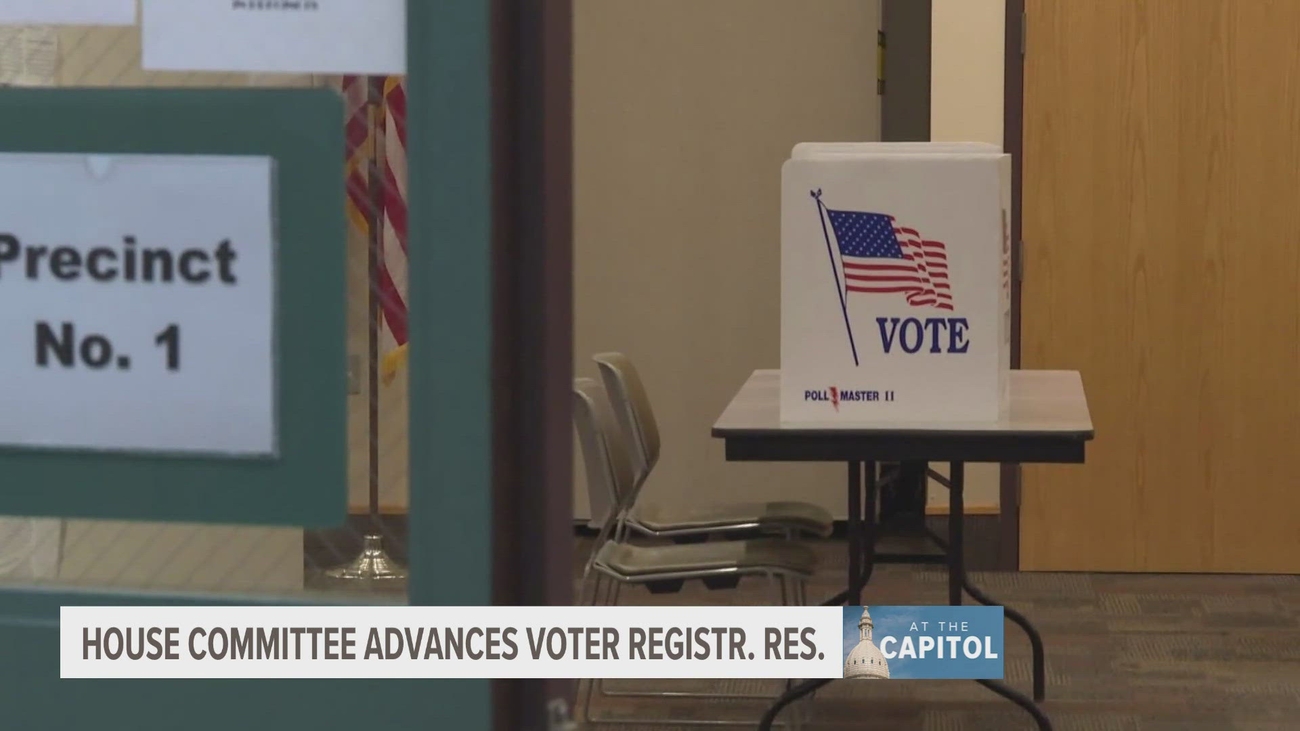
In Europe, the United States, and Russia, the upcoming legislative elections in Hungary will be closely watched on Sunday. For the first time since 2010, the return of Viktor Orbán to power, the election results are uncertain. “According to various independent polling institutes, there is a very real risk for Orban to lose these elections. Even though there is still a large portion of undecided voters,” said Arthur Kenigsberg, president and co-founder of Euro Créative, a think tank specializing in Central and Eastern European countries.
Facing Viktor Orbán, who has been in power since 2010 and is seeking a fifth term, his conservative and pro-European rival, Péter Magyar, has been running a high-energy campaign. The Euro-deputy, sitting in the EPP group and former member of Fidesz, Orbán’s party, sometimes holds up to 6 meetings per day alongside local candidates from his party, Tisza.
Péter Magyar benefits from the political space left vacant by several opposition parties who chose not to get involved in the campaign.
“Péter Magyar promises a policy of proximity,” said Richard Werly, an international journalist and editorialist for the Swiss daily, Blick. “As part of a report, I followed a day of his campaign. He is a right-wing man on societal issues. He has a program very much aligned with Orban’s, defending family and traditional values … His main political focus is on fighting corruption, the predatory system of the current regime. His second axis is the defense of freedom of expression. He proposes to give a voice back to the Hungarians who are afraid. He proposes to dismantle the media controlled by Orban. He promises a policy of proximity,” summarized Richard Werly.
Péter Magyar does not have much of a choice but to run a ground campaign. In Hungary, where many independent press organs have closed in the past 16 years, 80% of the media is controlled by businessmen linked to power, who receive almost all of the state advertising expenditure. The Liberal Institute Republikon studied the main public television channel for eleven months and found that Viktor Orban was portrayed positively in 95% of cases. In contrast, the opposition candidate Péter Magyar was denigrated in 96% of cases when mentioned.
“If Orban loses on Sunday, we can say that his campaign was poorly calibrated,” commented Arthur Kenigsberg. “Orban has been shaken up in this campaign. Magyar uses a narrative that works very well with the Hungarians, highlighting the rule of law, corruption, and the state of public services.”
The United States and Russia come to Orban’s aid
There are suspicions of foreign interference surrounding Sunday’s election. US Vice President JD Vance visited Budapest this week. On Thursday evening, US President Donald Trump once again expressed his support for his closest ally in the European Union on his social network. “Hungary: Go vote for Viktor Orban. He is a true friend, a fighter and a winner, and he has my total and complete support,” he wrote.
Orban is also the closest ally of Russia’s Vladimir Putin within the EU. He has opposed the EU’s consensus on Ukraine, obstructing the adoption of sanctions and blocking a €90 billion aid package for Kiev. On Thursday, the European Commission demanded explanations from Hungary after a press investigation claimed that Budapest had provided Moscow with direct access to strategic EU information in recent years.
“The government is running a massive media campaign funded by taxpayers to promote its anti-Ukrainian positions, such as its opposition to Ukraine’s accession to the European Union, presenting Viktor Orban as the only barrier to war in the neighboring country,” explained Arthur Kenigsberg.
“If Orban loses on Sunday, we can say that his campaign was poorly calibrated. He talked about everything except domestic policy and preferred to focus his campaign on Hungary’s place in the concert of nations. His anti-Ukrainian narrative and his criticism of the EU’s hostility towards Russia do not seem to be gaining traction,” added Arthur Kenigsberg.
Context: – The upcoming legislative elections in Hungary are significant as Viktor Orbán faces a strong challenge, which could lead to an uncertain outcome.
Fact Check: – The article accurately reports on the political landscape in Hungary ahead of the elections, highlighting the key players and foreign involvement.