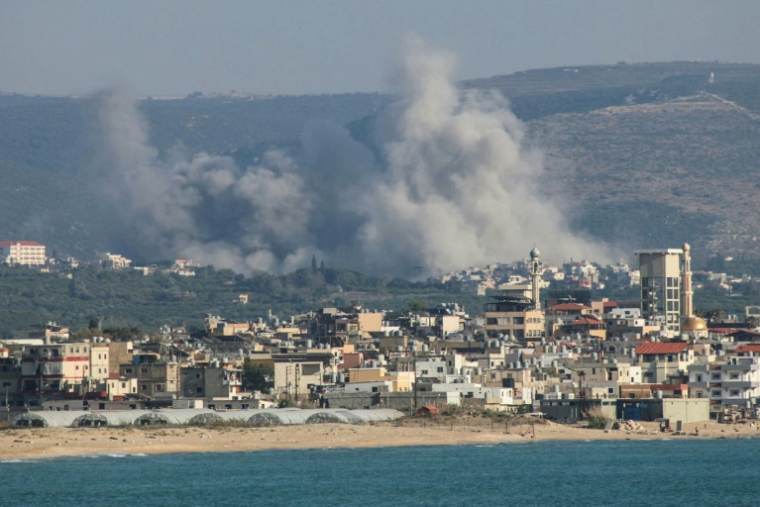
On April 7, 2026, a ceasefire was agreed between the United States and Iran. However, on the following day, Israel continued its massive strikes in Lebanon, causing hundreds of casualties. The reason cited was that Lebanon was not included in the agreement, according to Washington and Tel Aviv.
In this context, the Israeli army had warned that the Lebanese Islamist movement, allied with Tehran, could expand its attacks beyond northern Israel “in the coming hours.” Prime Minister Benjamin Netanyahu declared that Israel would strike Hezbollah “wherever necessary,” claiming the strikes were carried out “with strength, precision, and determination.”
As the airstrikes had already claimed over 200 lives according to Lebanese authorities, the situation was weakening the ceasefire. Tehran denounced a violation of its spirit, while several international actors warned of the risk of a resumption of hostilities. Is the ceasefire already in jeopardy? To discuss this, the latest episode of “Le Titre à la Une” featured Didier Idjadi, a French-Iranian sociologist, Iranian political refugee, and author of “Iran, Islamism, Secularism: History of a Confrontation” from Héliade editions.
Israël launched its largest coordinated wave of strikes on Lebanon just after the announcement of the ceasefire between the United States and Iran. This timing was not coincidental. Why did Israel choose this particular moment?
Israel chose this moment because it aligned with American goals. The Americans demanded that the Iranian regime halt all uranium enrichment, revise its missile policy towards Israel, hand over 450kg of enriched uranium to the International Agency, and end support for Islamic organizations in the region like Hezbollah and Hamas.
Meanwhile, Israelis claim that for 47 years, the Iranian regime has threatened Israel’s very existence. In its propaganda, the regime has always sought the destruction of the State of Israel, calling it a “cancer.” The establishment of these “proxy” organizations aimed at this destruction. There was a convergence of American and Israeli interests in this regard.
Even though there were differences within the American team, the Israeli Prime Minister was convinced that action was necessary. Added to this was the struggle of the Iranian people against the Islamist regime. In January, large demonstrations took place throughout Iran with people chanting “down with the Islamic Republic” and seeking to end the religious regime.
Donald Trump and Benjamin Netanyahu were in agreement that Lebanon should not be part of the ceasefire?
Each side has its interpretation. The Iranian regime claims to want a ceasefire on the condition that all ongoing wars in the region cease. The Israelis and Americans have a different understanding of the situation.
Are the negotiations starting on April 10 in Pakistan already compromised?
Yes, definitely. The nature of the Iranian regime is the primary cause. It is never in favor of negotiations that would deprive it of its nuclear capabilities or missiles. For them, negotiations are merely a way to buy time.
To what extent could Israeli strikes on Lebanon jeopardize the truce between the United States and Iran?
Israel has always maintained its autonomy from Hezbollah. I don’t believe that the Americans would oppose continued Israeli bombardments against Hezbollah. However, for the Iranian regime, it is a pretext to abandon negotiations, arguing that these strikes contradict the initial agreement.
Overall, the situation in the region remains tense as international forces navigate the delicate balance of power and alliances.