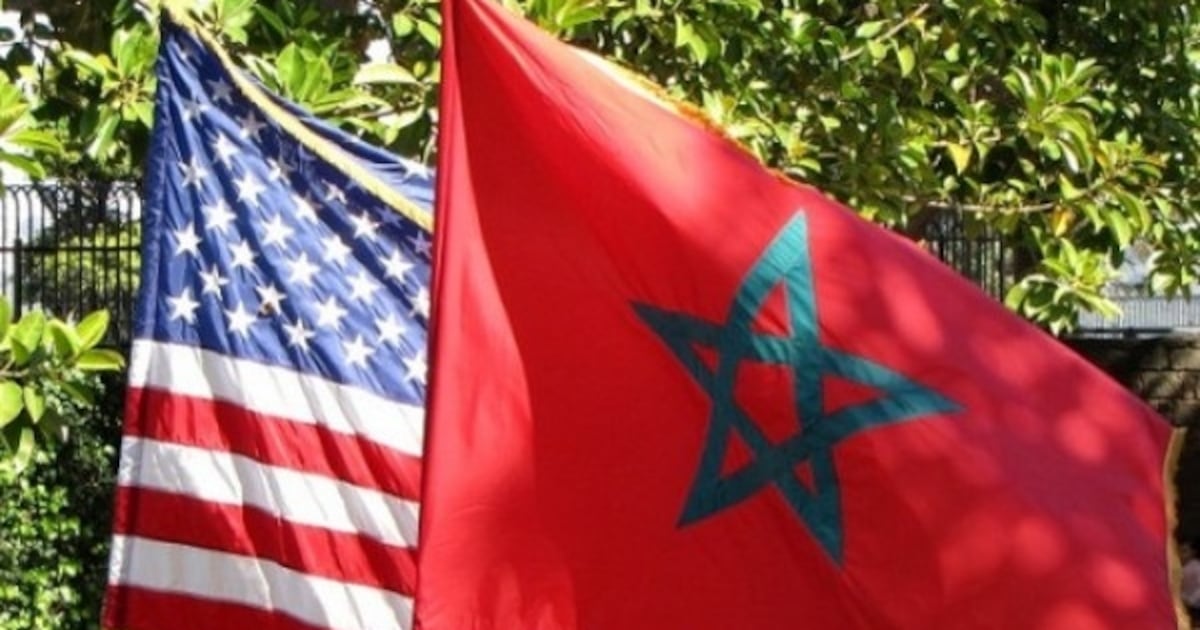
Playing his political survival in the legislative elections of April 12, the Hungarian Prime Minister intends to maintain power with the support of Russia, the United States, and China.
On Good Friday, the whole of Hungary is at a standstill. Shops have closed their doors, and businesses have given their teams the day off. In the former kingdom of Saint Stephen, faith is not taken lightly, as long as it is Christian. However, about a hundred kilometers south of the capital, Budapest, workers continue to toil on the construction site of the Paks-II nuclear power plant. Located on the west bank of the Danube, this heavily guarded site conceals a gaping hole. In early February, a concrete slab was poured on which two reactors will be placed, adding to the four active ones in Paks-I, providing about 70% of the country’s electricity needs.
The Moscow Connection
If it was only that… As the legislative elections of April 12 approach, which will define the fate of the land of the Magyars for the next four years, the government has plastered posters everywhere, in the city and countryside, demonizing the President of the European Commission Ursula von der Leyen, and Ukrainian leader Volodymyr Zelensky. “Dangerous!”, “Let’s stop them!”, “Don’t let them decide in our place!”, can be read on the posters, among other hyperboles. According to Viktor Orban, who has adopted the Kremlin’s narrative, the responsibility for the Russian invasion of Ukrainian Donbass in February 2022 would be attributed to Kiev.
In Western chancelleries, it is an open secret. Prime Minister Orban, along with his Slovak counterpart Robert Fico, is the Trojan horse of Vladimir Putin on the old continent. The main EU member states had taken the habit of excluding this duo of saboteurs from a number of strategic meetings. But had they truly grasped the extent of Moscow’s interference in Budapest’s affairs? On March 31, a recording published by the investigative media The Insider revealed that Hungarian Foreign Minister Peter Szijjarto is clandestinely working for his Russian counterpart, Sergey Lavrov.
The External Threat Ploy
Although not surprising, this collusion shocked Gergely Fejerdy, director of the Otto de Habsbourg foundation, who meets us in his office-library in central Budapest. “Licking the boots of the Russians is against human nature. We have been in confrontation with them throughout our history. In 1956, it was their tanks that crushed the Hungarian popular uprising. Viktor Orban justifies this alliance by our energy dependence. However, alternatives were possible and may have been cheaper than the Russian solution. But the close associates of the Hungarian government want to take advantage of an opaque system linked to Moscow, notably through the national oil company MOL.”
MOL is indeed one of the entities in Orban’s galaxy that finance the numerous initiatives promoted by the Prime Minister to attract sovereignists from around the world to Budapest. Thibaud Gibelin, a 36-year-old doctoral student from Gard, is one of them. This former parliamentary assistant to European Parliament member Jean-Francois Jalkh (National Rally) perfectly recites his arguments. “Viktor Orban plays the nation card against submission to the empire. However, the empire currently threatening Hungary is not Moscow, but Brussels, even if the Slavic giant must be contained.”