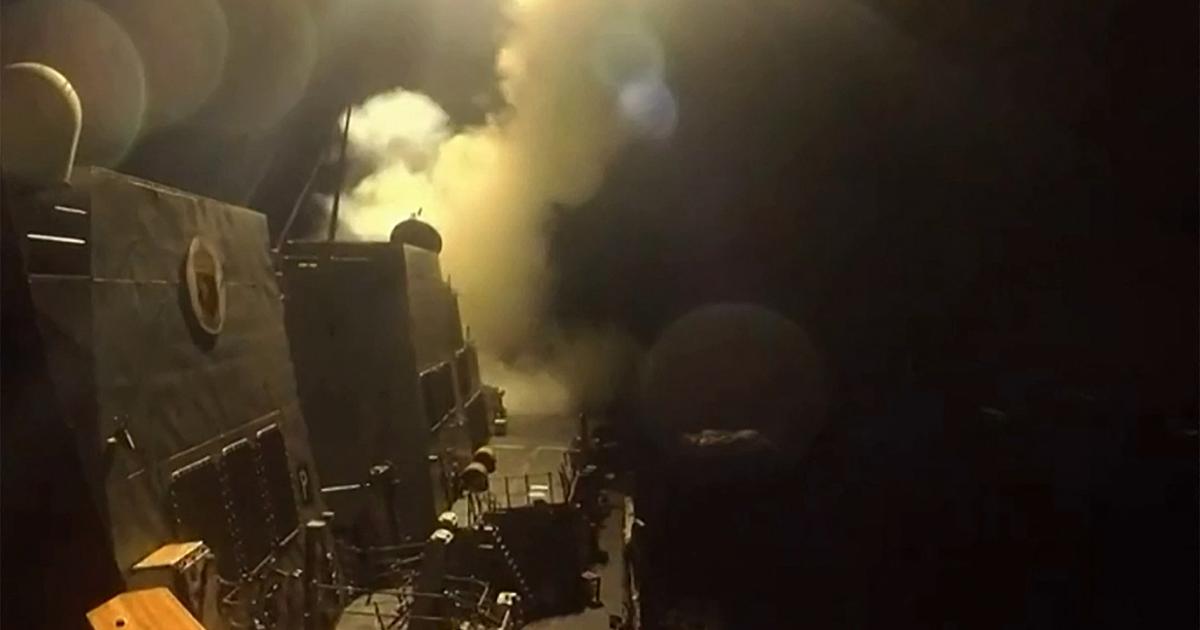
One of the two crew members of an American F-15E fighter-bomber is still being sought by the United States and Iran on Saturday, April 4. The pilots of the American army are trained to face this type of situation during their training.
Washington and Tehran have been focused since Friday, April 3 on finding one of the two occupants of the American F-15E fighter-bomber that the Iranian army claims to have shot down in the southwest of the country, in the Khuzestan region. The second crew member was rescued by American special forces, according to American media like Axios and CBS News.
US Air Force pilots like the one currently being sought in Iran are trained to experience this type of scenario. They undergo training under the SERE program (“Survival, Evasion, Resistance, Extraction”).
“What they learn is that once they are ejected from the fighter jet, they must find the best hiding spot or escape depending on the environment they are in,” detailed former Colonel Cedric Leighton for CNN.
Hide while remaining accessible
A pilot in hostile territory must evade the enemy’s surveillance while remaining accessible for rescue efforts. This can involve going on a rooftop in urban areas or finding a clearing for a helicopter to land.
“And if I move, I’ll try to do it at night” to avoid detection, advises Houston Cantwell, a former pilot of the American army and expert at the Mitchell Institute for Aerospace Studies interviewed by AFP.
Another important aspect in such a situation is to always have access to water. “You can survive without food for a while, but you need water every day,” Houston Cantwell reminds.
Shot down by Bosnian Serbs in June 1995 and rescued after six days of searching, Captain Scott O’Grady used a sponge that helped him drink by allowing him to collect rainwater and soil moisture.
The SERE program also includes activating the radio beacon equipped by emergency ejected pilots so they can be located by military personnel tasked with rescuing them.
“These beacons cannot be activated permanently, otherwise the pilots could be detected by the enemy,” explains Admiral Jean-Louis Vichot to BFMTV, former French military mission chief at NATO. “Usually, they only transmit on frequencies known to those looking for them,” he adds.
High-risk operations for military personnel
In parallel, during military operations like the one carried out in Iran, each branch of the American military keeps specialized troops on alert to extract pilots. “The Americans put everything in place instantly. It’s permanent, because we know that (this kind of situation) can happen,” notes General Jean-Paul Paloméros, former NATO Allied Commander, on BFMTV.
Military personnel engaged in these extraction operations take considerable risks themselves. In images filmed in the region where the downed plane pilot in Iran is being sought, an American helicopter can be seen flying at low altitude and being targeted by Iranians armed with firearms.
“This is the kind of thing you would only do in a situation where you are willing to take very big risks because the objective is very important, namely saving lives,” summarized security analyst Aaron McLean on CBS.
[Context: The article discusses the search for an American pilot in Iran after an F-15E fighter jet was shot down by the Iranian military.]
[Fact Check: The content includes quotes from various sources, such as former Colonel Cedric Leighton, Admiral Jean-Louis Vichot, Houston Cantwell, General Jean-Paul Paloméros, and security analyst Aaron McLean.]